What is a Robot Gripper?
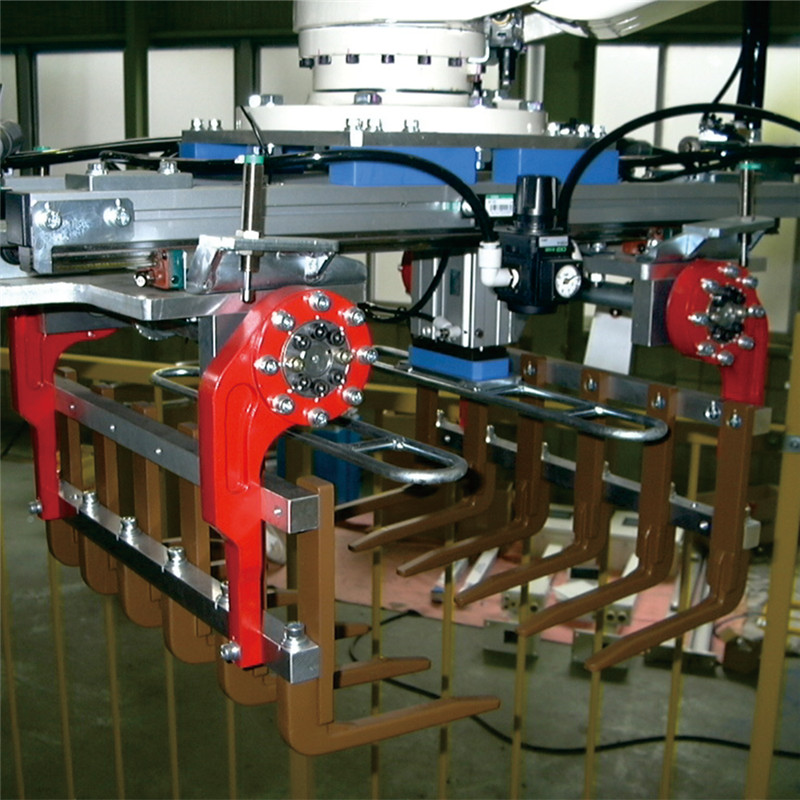
A robot gripper, also known as an end-of-arm tooling (EOAT), is a device attached to the end of a robot arm. Its primary function is to grasp, hold, and manipulate objects, mimicking the role of a human hand. Grippers come in various shapes and sizes—from simple two-finger claws to sophisticated three-finger adaptive designs—and are crucial for automating tasks like inspection, assembly, machine tending, and palletizing.
Types of Robot Grippers
Robot grippers can be broadly classified based on their operating mechanisms and design:
1. Pneumatic Grippers
Operate using compressed air to open and close jaws or fingers.
Known for delivering strong gripping force in a compact and lightweight form.
Ideal for high-speed, repetitive tasks in manufacturing.
Easy to maintain and cost-effective, leveraging existing compressed air infrastructure.
2. Hydraulic Grippers
Powered by hydraulic fluid, offering higher gripping force than pneumatic types.
Suitable for heavy-duty applications requiring robust and reliable gripping.
Typically larger and more complex, used in industries handling heavy or bulky parts.
3. Electric Grippers
Use electric motors to control grip force and speed precisely.
Offer fine control, making them excellent for delicate or intricate tasks, such as electronics assembly.
More expensive and larger than pneumatic grippers but provide superior adaptability.
Compatible with collaborative robots (cobots) due to their precision and gentle handling.
4. Vacuum Grippers
Utilize suction to lift and hold objects without mechanical fingers.
Effective for handling flat, smooth, or porous items like boxes, cartons, or glass sheets.
Energy-efficient and quiet, but less effective on rough or porous surfaces without airtight seals.
5. Adaptive Grippers
Feature multiple fingers (commonly three) that conform to the shape of objects.
Provide versatility to handle objects of varying sizes and shapes with a single gripper.
Include force, position, and speed control for each finger, enabling secure and gentle gripping.
Plug-and-play integration with universal robots and other cobot brands.