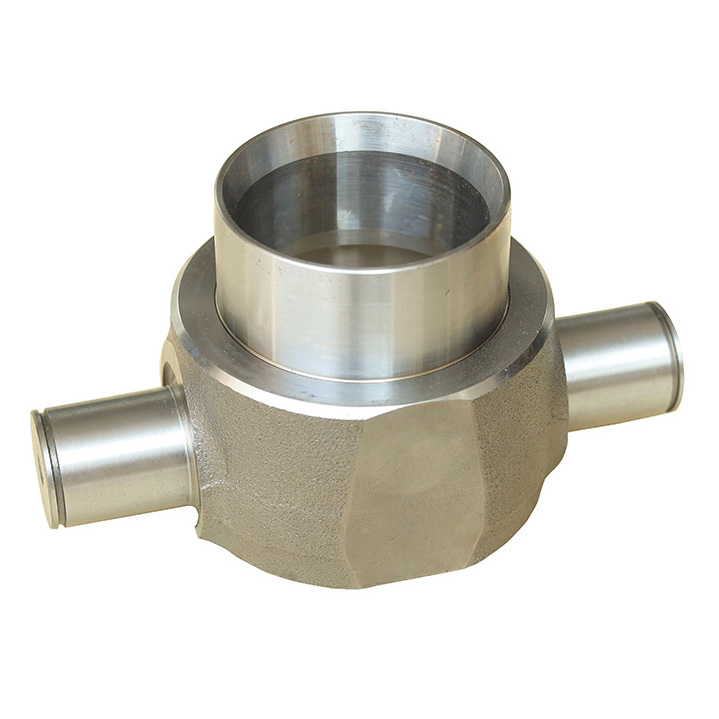
What Are Welded Structural Components? Industry Applications And Selection Criteria
Welded structural components are structural parts formed by joining metals (or other materials) through welding processes. As the connection core in the industrial sector, they support various critical structures ranging from automobile bodies to aerospace equipment, finding extensive applications in automotive manufacturing, aerospace, construction engineering, and other industries, serving as indispensable fundamental components in modern industrial production.
I. Automotive Manufacturing: The Invisible Bond of Vehicle Bodies and Power Systems
In automotive manufacturing,
welded structural components permeate core areas such as vehicle bodies, chassis, and engines. For instance, car body frames commonly use spot welding—a process that heats metal contact surfaces via electric current and applies pressure to rapidly join sheet metal parts, balancing efficiency and structural strength. Meanwhile, power system components like engine blocks and transmissions rely on laser welding—this high-precision technique achieves tighter joints, effectively ensuring the sealing and stability of power transmission to prevent oil or gas leaks. It can be said that welded structural components directly determine a vehicle's safety and durability.
II. Aerospace: The Reliable Performer in Extreme Environments
Aerospace equipment must withstand extreme conditions such as high-altitude low pressure, high-speed friction, and drastic temperature changes, thus imposing far higher requirements on welded structural components than ordinary industries. Common materials include high-temperature resistant and corrosion-resistant specialty metals like titanium alloys and nickel-based alloys. Welding processes must strictly adhere to industry standards—weld seams must undergo non-destructive testing (such as ultrasonic or radiographic inspection) to ensure no micro-cracks or defects. Additionally, joint strength must withstand the massive loads during takeoff or long-term exposure to the space environment, allowing no margin for error.
III. Construction Engineering: The Skeleton Connector of Steel Structures
In steel structure projects like bridges and high-rise buildings, welded structural components are the core method for connecting steel columns and beams. For example, submerged arc welding is commonly used for splicing steel beams in long-span bridges—this efficient process can weld thick steel plates in a closed environment, significantly improving construction efficiency. Construction welding joints also require fatigue resistance testing to withstand long-term cyclic loads from vehicle traffic and wind forces. Furthermore, anti-corrosion treatment is a necessary procedure for construction weldments—methods like painting and galvanizing delay steel corrosion in humid or acid rain environments, extending structural service life.
Selecting Welded Structural Components: 3 Core Criteria
When selecting welded structural components, comprehensive judgment based on application scenarios and industry requirements is necessary:
1. Consider the application environment: Outdoor construction prioritizes corrosion resistance, while aerospace equipment requires high-temperature or low-pressure tolerance;
2. Evaluate load conditions: Components bearing heavy loads (e.g., automotive chassis) need high-strength materials and processes;
3. Assess service life: Long-term structures (e.g., bridges) require attention to fatigue resistance and corrosion-resistant design.
Moreover, different industries have clear regulations for welding processes and materials (such as aerospace weld seam standards and construction steel structure codes), which must be strictly followed during procurement or design to avoid safety hazards from non-compliance.
Although invisible, welded structural components support all aspects of industrial production. Understanding their application scenarios and selection criteria helps enterprises more accurately match needs and ensure structural safety and stability—this is the core reason for the enduring importance of welded structural components in the industrial sector.