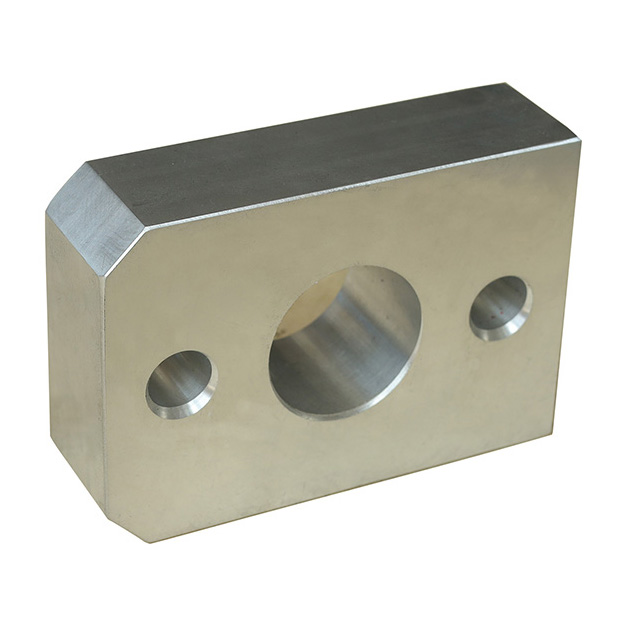
What Is Milling? A Comprehensive Analysis Of Principles, Characteristics, And Applications
In the processing toolbox of the manufacturing industry, milling is undoubtedly a versatile all-rounder - it can transform rough metal blocks into precision automotive engine parts, cut plastic sheets into complex mold cavities, and even machine high-precision curved surfaces for aerospace applications. As one of the most basic and commonly used methods in mechanical processing, milling uses the simple logic of rotation + movement to solve over 90% of the processing challenges for complex parts. Today, we will thoroughly explain the principles, characteristics, equipment, and applications of milling to help you fully understand this fundamental (shénqì - magic tool) of the manufacturing world.
I. What is Milling? Core Definition and Underlying Logic
Milling is a cutting method that involves active rotation of the tool + coordinated movement of the workpiece: a high-speed rotating multi-edge milling cutter (similar to a toothed rotating cutter head) cuts the workpiece fixed on the worktable (the workpiece moves linearly or curvilinearly), thereby removing excess material to obtain the desired shape (such as flat surfaces, grooves, curved surfaces, holes, etc.).
Simply put,
milling is like planing wood with a rotating plane - the cutter head spins, and the wood moves slowly to carve out the desired shape. Unlike turning (where the workpiece rotates and the tool is stationary), the core of milling is the tool rotates itself, which allows it to handle more complex part shapes.
II. Key Principles of Milling: 4 Core Logics
Milling's ability to handle various parts relies on 4 key characteristics:
1. Tool Rotation: The Core Source of Power
The milling cutter is the heart of milling - it typically has 3-8 cutting edges (or even more). When rotating at high speed (several thousand to tens of thousands of revolutions per minute), the cutting edges cut the workpiece like rotating saw blades. This tool rotates, workpiece does not rotate mode allows milling to flexibly handle cutting requirements at different angles (such as vertical cutting, inclined cutting).
2. Workpiece Movement: Precise Coordination
The workpiece is fixed on the milling machine table and cooperates with the rotating tool through linear movement (forward/backward, left/right, up/down). For example, to machine a rectangular groove, the worktable moves the workpiece forward slowly, and the rotating milling cutter carves a neat groove - just like drawing patterns on a cake with a rotating knife.
3. Multi-edge Cutting: The Secret Weapon for Efficiency
The multiple cutting edges of the milling cutter take turns working, unlike single-edge tools that fight alone. For example, a 4-edge milling cutter makes 4 cuts per rotation, equivalent to 4 tools working simultaneously, making it 2-3 times more efficient than single-edge tools.
4. Full Shape Coverage: From Simple to Complex
Whether it's flat surfaces, grooves, steps, curved surfaces, contours, or holes, milling cutters can handle them by changing their shape (such as face mills, end mills, ball nose mills). For example:
- Face mills are suitable for machining flat surfaces;
- End mills are suitable for machining grooves and contours;
- Ball nose mills are suitable for machining curved surfaces (such as mold cavities).
III. Common Milling Equipment: 3 Types of Core Machine Tools
The quality of milling results depends crucially on the equipment. Common milling equipment includes 3 types:
1. Conventional Milling Machines: Basic Processing Machines
Divided into vertical milling machines (spindle vertical downward) and horizontal milling machines (spindle horizontal):
- Vertical milling machines: Suitable for machining flat surfaces, grooves, and steps (such as flattening the surface of a steel plate);
- Horizontal milling machines: More suitable for machining complex contours (such as gear teeth, inclined surfaces of parts).
Conventional milling machines require manual operation (e.g., manually cranking the worktable) and are suitable for small-batch, simple part processing.
2. CNC Milling Machines: High-precision Intelligent Players
Computer programs control the movement of the milling machine - you input the 3D drawing of the part into the computer, and the machine automatically adjusts the rotation speed of the milling cutter and the movement path of the worktable, achieving precision up to the micron level (1 micron = 0.001 millimeters).
CNC milling machines are suitable for processing complex parts, such as mobile phone metal middle frames, aircraft engine blades, and medical implants (such as hip prostheses).
3. Machining Centers: One-stop All-round Kings
These are upgraded CNC milling machines - in addition to milling, they can also drill, bore, and tap (cut threads for screws). In other words, a part can be completed from blank to finished product in one go without changing machines.
For example, machining a plastic mold: previously, you would mill the cavity and then go to a drilling machine to drill holes; now a machining center can do it all with one click, saving time and ensuring precision. For mass production enterprises, machining centers are efficiency神器 (shénqì - magic tools).
IV. Core Advantages of Milling: Why Manufacturing Can't Live Without It?
Milling has become a top stream in the processing industry (yīkào - relying on) 3 hard strengths:
1. High Precision: Capable of Detailed Work
Milling precision can reach IT7-IT9 grades (industrial precision standards, with smaller numbers indicating higher precision), or even higher. For example:
- Medical implants (such as hip prostheses) need to perfectly fit human bones and must be milled;
- The curved surfaces of aircraft engine blades have extremely high precision requirements and also rely on milling.
2. High Efficiency: Capable of Fast Work
Multi-edge cutting + high-speed rotation make milling 2-3 times more efficient than ordinary turning. For example, machining a 1-meter-long steel plate surface takes 1 hour with ordinary turning but only 20 minutes with milling - for mass-produced automotive parts, fast translates to cost advantage.
3. Wide Range: Capable of Both Rough and Fine Work
From small parts of a few millimeters (such as watch gears) to large parts several meters long (such as aircraft wing structural components); from simple flat surfaces to complex curved surfaces, grooves, and holes - milling can take the job. It can be said that for metal or plastic parts, over 90% of shapes can be processed by milling.
V. Main Applications of Milling: Penetrating All Manufacturing Fields
The versatility of milling makes it an essential tool in almost all manufacturing industries, with main applications in 4 major fields:
1. Automobile Manufacturing: Processing of Core Components
Core automotive parts such as engine blocks, transmission gears, and chassis structural parts all require milling. For example, the flat surface of an engine block has extremely high precision requirements (otherwise, oil leakage may occur), which must be ensured by milling.
2. Aerospace: Processing of High-precision Parts
Aircraft wing structural components, engine blades, satellite housings, and other parts need to be both lightweight and strong, requiring milling to process complex thin-walled structures (such as the honeycomb interior of wings).
3. Medical Devices: Processing of Implants and Instruments
Orthopedic implants (such as hip and knee prostheses) need to perfectly fit human bones, and surgical instruments (such as the cutting edge of bone drills) require extremely high sharpness - all relying on the high precision of milling.
4. Mold Manufacturing: Processing of Cavities and Cutting Edges
The cavities of plastic molds (such as mobile phone case molds) and the cutting edges of stamping dies (such as stamping dies for automotive steel plates) all require milling to process complex shapes. The precision of the mold directly determines the quality of the product, and milling is the necessary path.
Conclusion: Milling - The Basic Backbone of Manufacturing
As the big brother of mechanical processing, milling uses the simple logic of rotation + movement to solve the processing challenges of complex parts. From automobiles to aerospace, from medical care to molds, behind every precision part lies the contribution of milling.
For the manufacturing industry, milling is not an optional processing method but a necessary one - it supports the precision and scale of modern manufacturing with its precision, efficiency, and range.
If you want to learn more details about milling (such as how to choose a milling cutter, how to set parameters), you can follow our subsequent content - we will continue to share practical knowledge about mechanical processing.