A Detailed Explanation Of Turning: Principles, Process Characteristics, Applications, And Lathe Fundamentals
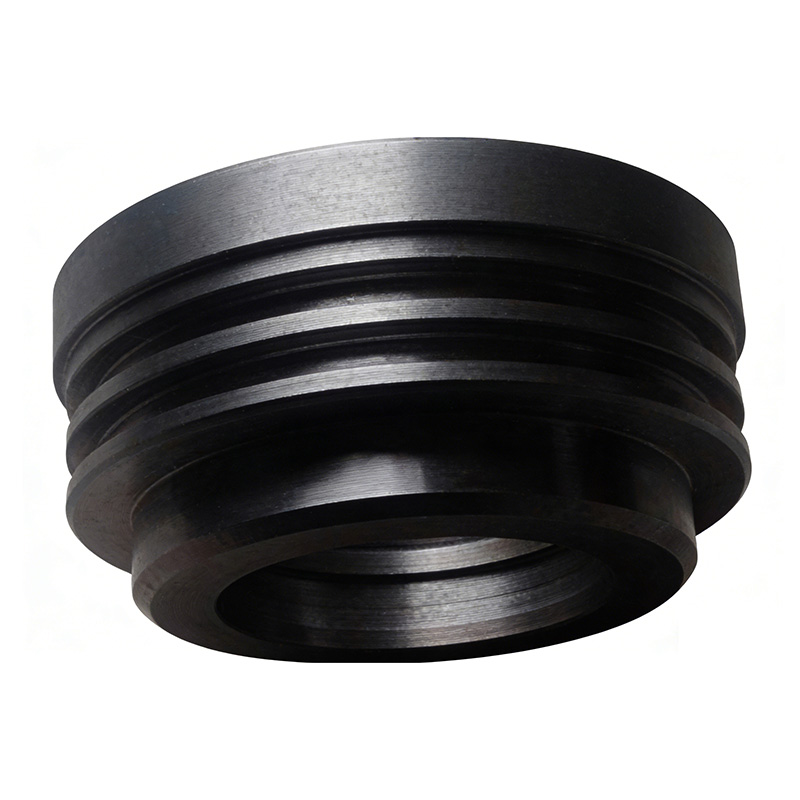
Turning is one of the most basic and commonly used cutting processes in the field of mechanical manufacturing, widely serving the production and manufacturing of shaft, disk, and sleeve parts. Its core logic is to achieve cutting through the cooperation between the turning tool and the rotating workpiece—the workpiece is fixed on the lathe chuck and rotates at high speed, while the turning tool moves along a straight or curved path. The relative movement between the two can machine rotating surfaces such as inner and outer cylindrical surfaces, end faces, and conical surfaces; if tools such as drills, reamers, and countersinks are replaced, auxiliary processing such as drilling and reaming can also be completed, offering extremely high flexibility.
I. Core Principles and Process Characteristics of Turning
The essence of
turning is rotational cutting: the rotation of the workpiece provides the main movement, and the linear or curved movement of the turning tool provides the feed movement. The combination of the two realizes material removal. The advantages of this process are very prominent:
1. Easy to ensure positional accuracy: Through the precise transmission of the lathe, it can easily meet the requirements of workpiece coaxiality (such as the cylindrical surfaces at both ends of shaft parts) and the perpendicularity between the end face and the axis;
2. Stable cutting process: The cutting force brought by the rotation of the workpiece is more uniform, avoiding the influence of inertial force or impact force, allowing the use of larger cutting parameters and high-speed cutting, which greatly improves production efficiency;
3. Suitable for finishing non-ferrous metals: When parts require low surface roughness (such as aluminum, copper and other non-ferrous metal parts), turning can obtain a smoother surface through finish turning or precision turning;
4. Low tool cost: Turning tools have a simple structure, are convenient to manufacture, sharpen and install, and are especially suitable for small and medium batch production scenarios.
II. Main Methods of Turning
According to processing accuracy and purpose, turning can be divided into three categories:
- Rough turning: Priority is given to efficiency, quickly removing excess metal from the blank and leaving sufficient allowance for subsequent processing;
- Finish turning: Focus on accuracy and surface quality to ensure that the parts meet the designed dimensions and roughness requirements;
- Precision turning: It belongs to ultra-high precision processing with extremely small depth of cut and feed rate, and the cutting speed can reach 150-2000m/min. Usually, superhard material tools are used for the manufacturing of high-precision products such as optical components and infrared lenses.
III. Application Scenarios of Turning
The core advantage of turning is processing rotating surfaces with a single axis, so common applications include:
- Traditional mechanical parts: such as straight shafts, gear disks, bearing sleeves, etc.;
- High-precision parts: With the development of mirror turning technology, turning can achieve nanoscale surface roughness, which is used in the manufacturing of high-end products such as optical lenses and infrared components.
From ordinary machinery to aerospace, electronic optics, turning can be found in almost all fields that require rotating parts.
IV. Classification and Common Types of Lathes
Lathes are the core equipment for turning, which can be divided into the following categories according to structure and use:
- Horizontal lathe: The most widely used, suitable for processing small and medium-sized shafts and disk parts;
- Vertical lathe: The spindle is arranged vertically, suitable for large disk parts (such as gear disks with a diameter of more than 1 meter);
- Turret lathe: Equipped with a turret tool post, which can quickly change tools, improve automation, and is suitable for batch production;
- Automatic/semi-automatic lathe: Controlled by programs or cams, reducing manual intervention and achieving higher efficiency;
- Copying lathe: Replicates the shape of parts through a copying template, suitable for batch processing of complex curved surfaces.
V. Types and Selection of Turning Tools
Turning tools are the teeth of turning processing, and common types include:
- Solid turning tool: suitable for simple cutting;
- Welded turning tool: The cutter head and the tool shank are welded together, with low cost but troublesome sharpening;
- Clamped turning tool: The cutter head can be quickly replaced, with strong flexibility;
- Indexable turning tool: Tool reuse is achieved by replacing inserts, with long service life and high efficiency, and is the mainstream choice for current mass production;
- Form turning tool: Used for processing complex curved surfaces (such as threads, grooves), which can be formed in one cutting.
VI. Lathe Maintenance and Safe Operation
Correct maintenance and safe operation are the keys to ensuring processing quality and personnel safety:
- Before operation: Lubricate the machine tool as required, check the handle position, run the machine at low speed for 5 minutes, and start work only after confirming no abnormalities;
- Clamping requirements: Workpieces and tools must be firmly clamped, and the extension length of the tool shank should not be too long (to avoid vibration);
- During processing: Do not stand directly in front of the rotating workpiece. Chip breakers and protective screens are required for high-speed cutting; use a brush or special hook to remove iron chips, and it is forbidden to touch them directly with hands;
- Finishing work: Do not take the workpiece or measure before the lathe comes to a complete stop; after finishing, clean the machine tool, retract the tailstock and carriage box to the rightmost end of the bed, and do daily maintenance.
Conclusion
As the cornerstone process of mechanical manufacturing, turning has always occupied a core position in industrial production with its characteristics of precision, efficiency and flexibility. From traditional manual lathes to modern CNC lathes and ultra-precision lathes, the progress of turning technology has continuously promoted the breakthrough of manufacturing accuracy—nowadays, it can not only process ordinary mechanical parts, but also be competent for nanoscale precision products such as optical components and infrared lenses.
For practitioners, mastering the principles, process characteristics and basic operations of turning can not only improve production efficiency, but also gain an advantage in the field of high-precision manufacturing. In the future, with the integration of numerical control technology and artificial intelligence, turning will continue to develop in a more intelligent and precise direction, providing strong support for the upgrading of the manufacturing industry.