Precision Parts Machining: A Comprehensive Analysis Of Definition, Application Industries, Advantages, And Core Technologies
In the precision revolution of modern manufacturing,
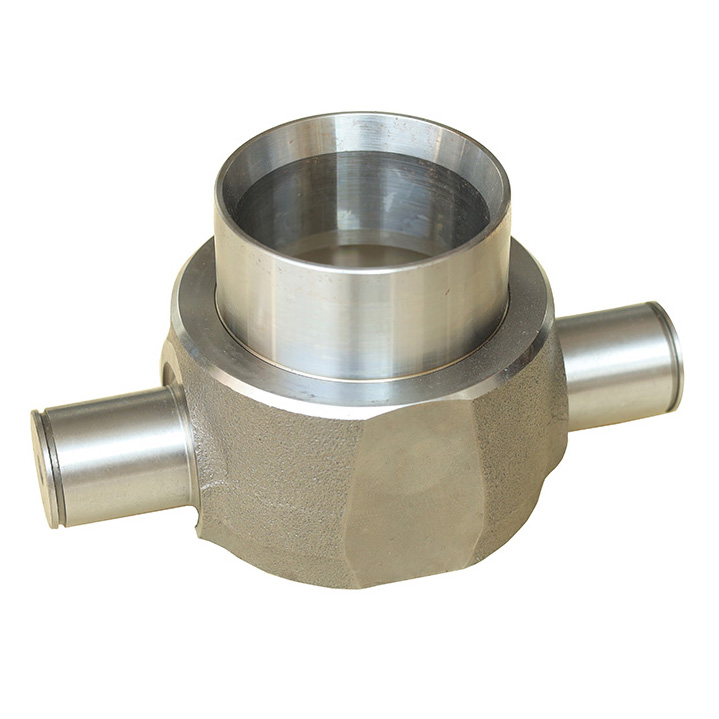
precision parts machining is the core link supporting the birth of high-end products—it uses high-precision machine tools and professional tools to perform precise operations such as cutting, grinding, and drilling on raw materials like metals, plastics, and composite materials according to design drawings or digital models, ultimately producing parts with dimensional errors controlled at the micrometer level and surface quality meeting strict standards. This technology is not only a process of making parts accurately but also the foundation for various industries to achieve product upgrading.
I. What is Precision Parts Machining?
Simply put, precision parts machining is the process of manufacturing parts according to 'extreme standards':
Traditional machining may allow errors at the millimeter level, while precision machining can control errors to the micrometer level (1 micrometer = 0.001 millimeters) or even smaller; at the same time, the surface roughness and form tolerances (such as roundness, straightness) of parts must also meet strict design requirements. For example, the lens holder of a mobile phone camera must ensure coaxiality error with the sensor ≤ 5 micrometers, otherwise, it will cause blurry photos—which is a typical scenario of precision machining.
II. Main Application Industries of Precision Parts Machining
The value of precision machining lies in its ability to meet the industry needs of no margin for error, covering almost all fields with high requirements for precision and reliability:
1. Aerospace
Core parts such as aircraft engine blades, landing gear components, and airframe structural parts require precision controlled within ±0.01 millimeters—the slightest error may affect aerodynamic performance or flight safety. For example, the blade profile surface of an engine turbine blade must fully conform to the design data to ensure the stability of fuel efficiency and thrust output.
2. Medical and Healthcare
Surgical instruments (such as the cutting edge of minimally invasive surgical knives), orthopedic implants (such as the ball head of an artificial hip joint), dental prostheses (such as the abutment of a porcelain tooth), etc., not only need to accurately fit the human body structure but also avoid surface defects that may cause rejection reactions. For instance, the surface roughness of artificial joints must be ≤ Ra0.8μm (equivalent to 1/100 of the diameter of a human hair) to reduce bone damage caused by friction.
3. Automobile Manufacturing
The precision of key parts such as pistons, cylinder heads, and transmission gears directly affects the engine's power output and fuel economy. For example, the tooth ring clearance of the transmission synchronizer must be controlled between 0.02-0.05 millimeters; otherwise, it will cause shifting jams or increased gear wear.
4. Electronic Products
Micro parts such as smartphone circuit boards (PCBs), laptop radiators, and camera module brackets require precision within millimeters. For example, the filter cavity of a 5G base station must ensure internal dimensional error ≤ 0.03 millimeters to ensure the stability of signal transmission.
5. Energy and National Defense
Precision valves for drilling platforms, reactor components for nuclear power plants, guidance parts for weapon systems, etc., have stringent requirements for precision and reliability. For example, precision pipe fittings for oil and gas pipelines need to withstand high-pressure environments, and their wall thickness error must be controlled within ±0.1 millimeters; otherwise, leakage risks may occur.
III. Core Advantages of Precision Parts Machining
Compared with traditional machining methods, the advantages of precision parts machining are more in line with the needs of modern manufacturing for high efficiency, precision, and low cost:
1. Controllable Precision: From Qualified to Extreme
It can achieve micrometer-level or even sub-micrometer-level precision control, meeting the zero error requirements of high-end products. For example, the dimensional accuracy of medical implants needs to perfectly match the patient's bones, and precision machining can directly restore human body scan data through digital modeling, avoiding errors from manual measurement.
2. Efficiency Improvement: Automation Reduces Time Costs
Relying on the automated machining of numerical control systems, 24-hour continuous operation can be achieved. Compared with traditional manual machining, production efficiency is increased by 3-5 times. For example, the processing of automobile transmission gears, which takes 1 hour per piece with traditional machine tools, only takes 15 minutes with CNC lathes, while reducing the time for manual tool change and adjustment.
3. High Material Utilization: Reducing Waste and Lowering Costs
Through precise tool path planning, raw materials can be maximized. For example, the traditional machining scrap rate of aviation aluminum alloy parts is about 70%, while precision machining can reduce the scrap rate to below 30%, significantly reducing material costs.
4. Customization Flexibility: Meeting Personalized Needs
It supports flexible production from 1 prototype to 100,000 pieces in batch, which can quickly verify new product designs (such as prototypes of smart hardware) and also mass-produce standardized parts (such as electronic connectors). For example, when a startup develops new headphones, it can quickly produce 10 prototypes through precision machining to test wearing comfort before adjusting the design.
5. Strong Reliability: Reducing Human Errors
The automated process reduces manual intervention and lowers the risk of operational errors. For example, the edge angle of medical surgical instruments needs to be controlled at 30°±1°, and CNC grinding machines can accurately reproduce the angle, avoiding deviations from manual grinding.
IV. Key Technologies of Precision Parts Machining
Currently, the core technologies of precision machining mainly focus on precise control and complex machining:
1. CNC Machine Tool Machining
By controlling tool movement through pre-written programs, it can process parts with complex contours (such as curved blades, helical gears), and is the most widely used precision machining method. Common CNC equipment includes CNC lathes (for processing shaft parts), CNC milling machines (for processing planes/cavities), and CNC grinders (for improving surface precision).
2. Electrical Discharge Machining (EDM)
Using the thermal effect of electric spark discharge to corrode materials, it is suitable for processing hard and brittle materials (such as tungsten steel) or complex cavities (such as precision of molds). For example, the injection mold cavity of a mobile phone shell requires EDM to achieve the complex internal.
3. Laser Machining
Non-contact machining does not cause mechanical stress on materials, and is suitable for fine cutting (such as PCB boards of electronic components), welding (such as battery pole pieces), or marking (such as anti-counterfeiting marks on medical devices). For example, the edge roughness of laser-cut camera brackets is ≤ Ra0.4μm, which will not affect optical performance.
V. Conclusion: Precision Machining is the Precision Engine of Modern Manufacturing
From the national heavy equipment in aerospace to the life parts in medical and healthcare, and then to the micro components in electronic products, precision parts machining has always been the behind-the-scenes hero of high-end manufacturing. It not only solves the problem of how to make parts accurately but also promotes the transformation of the manufacturing industry towards high precision and high added value—for example, 30% of the value of a high-end car comes from precision parts; 100% of the core parts of an aero-engine rely on precision machining.
With the integration of technologies such as artificial intelligence and digital twins, precision parts machining is developing towards more intelligent and more precise. In the future, whether it is the lander parts of the Tianwen Mars probe or the valve components of the artificial heart, they will all be realized by precision machining technology to achieve millimeter-level dreams.
For manufacturing enterprises, mastering precision machining capabilities is equivalent to holding the admission ticket to high-end products—after all, in an era of pursuing excellence, precision is competitiveness.