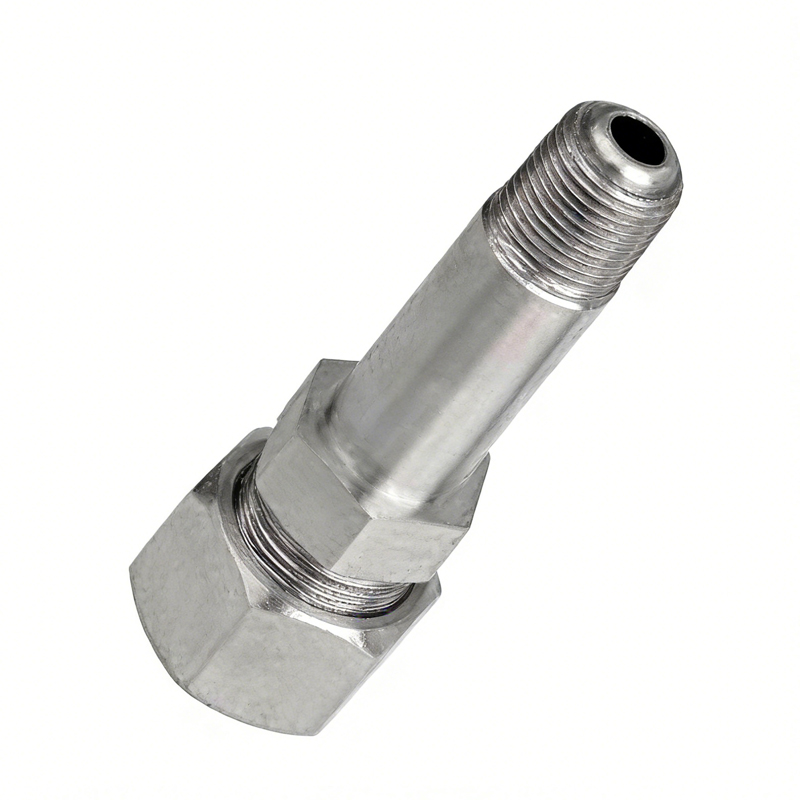
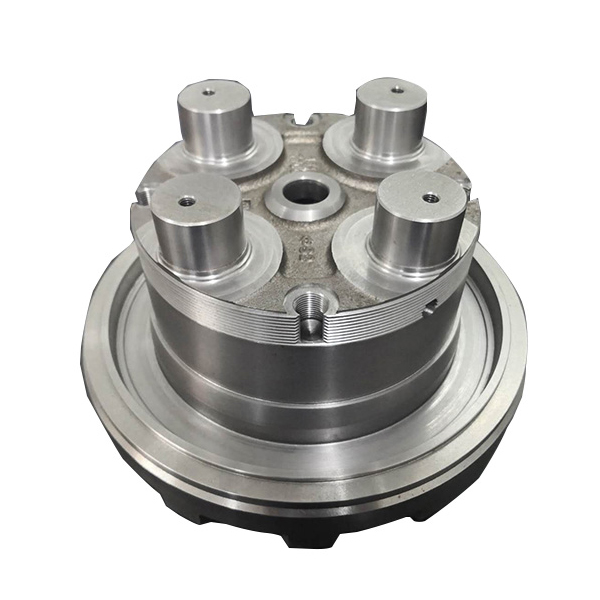
Comprehensive Analysis Of CNC Machining: From Principles To Applications, Mastering The Core Technology Of Modern Manufacturing
In today's era where manufacturing is upgrading towards high precision, large-scale production, and intelligentization, CNC machining (Computer Numerical Control machining) has long become the invisible cornerstone supporting innovation across various industries. From the precision casings of electronic components to the core blades of aircraft engines, almost all parts requiring high precision rely on the empowerment of CNC machining. This article will help you fully understand this advanced manufacturing technology, covering basic principles, core processes, applicable scenarios, and supplier selection skills.
I. What is CNC Machining?
CNC machining is the abbreviation of Computer Numerical Control. Essentially, it is a technology that drives machine tools to automatically complete part processing through pre-set programs. Unlike traditional manual or semi-automatic machining, every movement of a CNC machine tool (such as cutting, drilling, rotating) is precisely controlled by a computer, achieving micron-level (0.001mm) accuracy—equivalent to 1/60 the diameter of a human hair.
Simply put, CNC machining enables machine tools to read programs: first, convert the part design drawing into code understandable by the machine (such as G-code, M-code), and then the machine tool automatically performs cutting, forming, and other operations according to the code, without the need for repeated manual adjustments throughout the process.
II. The 5 Core Processes of CNC Machining
From design to finished product, each step of CNC machining is interconnected and indispensable:
1. Design: Transforming Ideas into Digital Models
The first step is to create a 3D digital model of the part using CAD software (such as AutoCAD, SolidWorks)—this is the blueprint for CNC machining. During the design phase, it is necessary to consider machining feasibility (such as avoiding overly complex concave structures), otherwise bottlenecks may be encountered in subsequent programming or machining.
2. Programming: Enabling Machine Tools to Understand Design Drawings
Programming is the key link in converting CAD models into machine tool instructions. Engineers use CAM software (Computer-Aided Manufacturing) to decompose the 3D model into specific machining paths (such as cutting from left to right, cutting depth 0.5mm), and finally generate G-code/M-code—equivalent to writing an operation manual for the machine tool.
3. Setup: Preparing for Battle Before Machining
Next, it's time to load ammunition into the machine tool:
- Workpiece Clamping: Fix the raw material on the machine tool workbench to ensure no displacement during machining;
- Tool Selection: Choose corresponding tools (such as end mills, turning tools) based on materials (e.g., aluminum, steel, plastic) and machining types (e.g., milling, turning);
- Parameter Debugging: Set the machine tool's speed, feed rate, coolant flow, etc., to avoid tool burning or workpiece deformation during machining.
4. Machining: The Automatic Performance of the Machine Tool
Once everything is ready, the machine tool runs automatically according to the program: the tool cuts the material along the preset path, and the workbench rotates or moves in coordination, with no manual intervention throughout the process. At this point, engineers only need to monitor the equipment's operating status to ensure no abnormalities (such as tool breakage, workpiece looseness).
5. Inspection: Verifying Results with Data
After machining is completed, it is necessary to verify whether the part meets the design requirements using precision measuring tools (such as coordinate measuring machines, micrometers)—for example, whether the dimensional error is within ±0.01mm and whether the surface roughness meets the standard. Only parts that pass the inspection can proceed to the next process.
III. Common Types of CNC Machining: Which One Should You Choose?
CNC machining is not a one-size-fits-all solution; different machining types correspond to different part requirements:
- CNC Milling: Uses rotating tools to remove material, suitable for machining complex-shaped parts (such as mobile phone middle frames, automotive dashboard brackets);
- CNC Turning: The workpiece rotates while the tool is fixed, suitable for machining cylindrical parts (such as shafts, sleeves, bolts);
- CNC Drilling: Specifically used for machining precise holes in workpieces (such as screw holes in electronic devices, catheter holes in medical devices);
- Electrical Discharge Machining (EDM): Eroding material with electric sparks, suitable for machining hard materials or complex cavities (such as deep grooves in molds, small gaps in stainless steel parts);
- Laser/Plasma Cutting: Uses high-energy beams to cut plates, suitable for thin metal or non-metallic materials (such as stainless steel door panels, acrylic signage).
IV. The 5 Major Advantages of CNC Machining: Why It Replaces Traditional Machining
Compared with traditional manual or semi-automatic machining, the advantages of CNC machining are almost dimension-defining:
1. High Precision, Low Defect Rate
Traditional machining relies on workers' experience, which can easily lead to slight differences in each batch of parts; while the errors in CNC machining are controlled by programs, ensuring every part is identical during mass production, making it suitable for industries with high precision requirements (such as medical, aerospace).
2. High Efficiency, Low Cost
CNC machine tools can operate continuously 24 hours a day without rest; meanwhile, functions such as automatic tool change and automatic measurement reduce manual intervention time—for example, machining a complex part may take 8 hours with a traditional machine tool, but only 2 hours with CNC.
3. Capable of Machining Shapes Traditional Machine Tools Can't Handle
Curved surfaces, deep cavities, polyhedrons... these complex structures that traditional machine tools shy away from are just a matter of programming for CNC machining. For example, the blades of aircraft engines (hollow structures with complex curved surfaces) can only be completed by CNC milling.
4. High Safety, Reduced Work-related Injuries
In traditional machining, workers need to operate tools at close range, which can easily lead to scratches and bruises; in CNC machining, workers only need to monitor outside the machine tool, greatly reducing safety risks.
5. Strong Traceability
Every batch of CNC-machined parts has complete program records—from design drawings to machining parameters and inspection reports, which can be retrieved at any time, facilitating quality traceability or process optimization.
V. Applications of CNC Machining: Covering Almost All High-Value Industries
From what flies in the sky to what's in your hand, the application scenarios of CNC machining are far beyond your imagination:
- Aerospace: Machining engine blades, airframe structural parts, satellite brackets (requiring light weight, high strength, and high precision);
- Automotive Manufacturing: Producing chassis suspension parts, transmission gears, engine blocks (must withstand high temperatures and pressures, with no tolerance for precision errors);
- Medical Industry: Manufacturing implantable prostheses (such as artificial joints), surgical instruments (such as orthopedic drills), medical device casings (requiring sterility and no burrs);
- Electronics Industry: Machining metal middle frames of mobile phones/computers, circuit board heat sinks, camera brackets (requiring thinness, lightness, and no deformation);
- Consumer Goods: Producing metal accessories for high-end furniture, watch cases for smart watches, precision gears for toys (requiring mass production and consistency).
VI. How to Choose the Right CNC Machining Supplier? Avoid 3 Major Pitfalls
To find a reliable CNC machining factory, the key is to focus on 5 core dimensions and not just price:
1. Technical Capability: Do They Have Experience in Handling Complex Parts?
Priority should be given to suppliers with multi-axis machine tools (such as 4-axis, 5-axis CNC)—multi-axis machine tools can machine more complex curved surfaces (such as aerospace blades), while ordinary 3-axis machine tools can only handle simple parts with front-facing cutting. In addition, ask whether the supplier can solve material challenges (such as machining hard materials like titanium alloys and stainless steel).
2. Quality System: Do They Have Full-Process Control Capability?
Reliable suppliers will definitely have a sound quality management system (such as ISO 9001 certification) and can provide inspection reports (such as coordinate measuring reports, roughness test reports). Avoid choosing small workshops without quality inspection links—the rework cost will far exceed the money saved.
3. Engineering Services: Can They Help You Optimize the Design?
A good supplier does not just machine according to the drawing but can help you optimize the design (such as changing a difficult-to-machine concave to an easily cut inclined surface) to reduce machining costs and time. For example, some suppliers offer DFM (Design for Manufacturability) consulting to help you avoid machining pitfalls during the design phase.