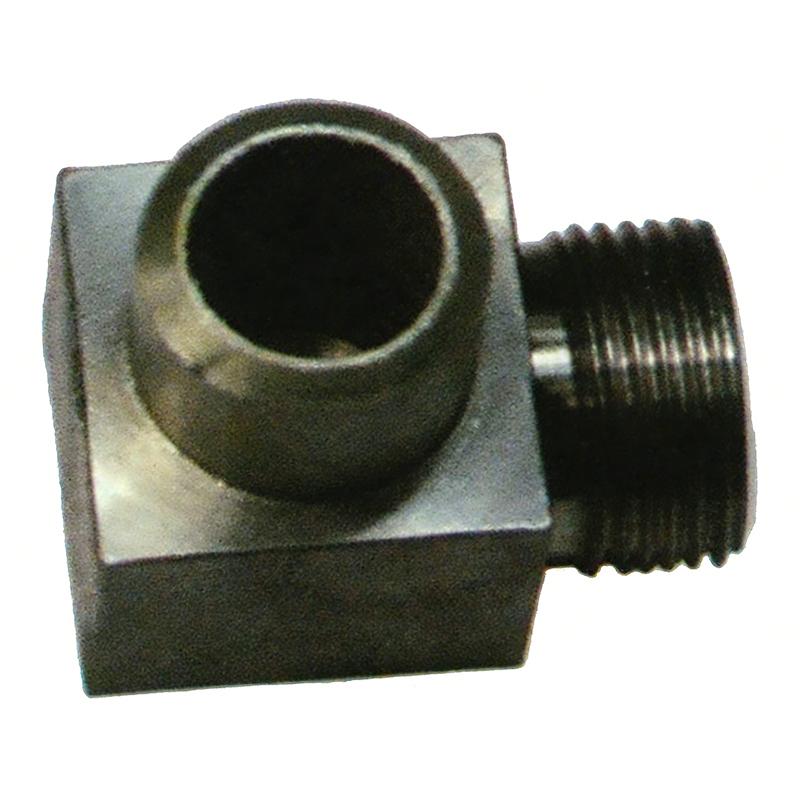
Engineering Machinery Components — Heavy-Duty Steel Selection And Heat Treatment
What Are Engineering Machinery Components?
Engineering machinery components are the load-bearing, wear-resistant, and structural parts used in excavators, loaders, bulldozers, cranes, mining trucks, and similar heavy equipment. The components must withstand shock, vibration, abrasive wear, and cyclic loading over long service intervals.
Major component categories:
Undercarriage components. Track shoes, track links, pins, bushings, idlers, rollers, sprockets.
Boom and arm structures. Booms, arms, buckets, bucket pins, linkages.
Drivetrain components. Axles, gears, shafts, couplings, final drives.
Hydraulic system components. Hydraulic cylinders, valve blocks, manifolds, pumps.
Chassis and frame. Main frame, side frames, counterweights.
Wear parts. Cutting edges, teeth, ripper tips, crusher liners.
Of these, the undercarriage and wear parts are the most demanding in wear resistance; the boom and arm structures are the most demanding in fatigue life. Chuangling's Engineering Machinery Components page documents the typical component range.
What Steels Are Used for Heavy-Duty Components?
Heavy-duty engineering machinery components use a range of carbon and alloy steels selected for the specific duty, with boron steels and Q&T alloy steels being the most common. The choice balances hardenability, toughness, wear resistance, and cost.
|
Component |
Typical steel |
Standard |
Key property |
|
Track shoe |
40MnB, 25MnB boron steel |
GB/T 1591, GB/T 3077 |
Through-hardening, wear resistance |
|
Track pin |
40Cr, 42CrMo |
GB/T 3077, EN 10083 |
Fatigue, wear |
|
Track bushing |
20CrMnTi carburizing steel |
GB/T 3077 |
Case hardening, wear |
|
Sprocket |
40MnB, 35MnB |
GB/T 3077 |
Wear, fatigue |
|
Idler / roller |
40Mn, 50Mn |
GB/T 700, GB/T 1591 |
Toughness, wear |
|
Bucket tooth |
High-chromium cast iron, 30CrMnSi |
GB/T 8263, GB/T 3077 |
Impact, abrasion |
|
Bucket pin |
40Cr, 42CrMo |
GB/T 3077 |
Fatigue, shear |
|
Boom / arm |
Q355B, Q460, Q690 |
GB/T 1591 |
High strength-to-weight, weldability |
|
Hydraulic cylinder barrel |
27SiMn, 45 seamless |
GB/T 8713, GB/T 8162 |
Weldability, pressure rating |
|
Hydraulic cylinder rod |
45 induction-hardened |
GB/T 699 |
Surface hardness, fatigue |
Equivalent international grades: AISI 4140 (42CrMo), AISI 1045 (45), AISI 15B21 (15B), SAE 8620 (20CrMnTi). Cross-reference to ASTM, EN, or JIS is straightforward for export projects.
What Is Boron Steel and Why Is It Used?
Boron steel is a low-carbon or medium-carbon steel with a small boron addition (typically 0.001–0.003%) that dramatically increases hardenability at low cost. It is the workhorse material for through-hardened engineering components.
|
Boron steel grade |
Carbon content |
Boron content |
Typical use |
|
15B |
0.12–0.18% |
0.0005–0.0035% |
Light-duty wear parts |
|
20MnB |
0.17–0.23% |
0.0005–0.0035% |
Track pins, bushings |
|
25MnB |
0.23–0.28% |
0.0005–0.0035% |
Track shoes, sprockets |
|
30MnB |
0.27–0.33% |
0.0005–0.0035% |
Heavy-duty wear parts |
|
40MnB |
0.37–0.44% |
0.0005–0.0035% |
Highly stressed components |
Boron steel's advantage is that a small amount of boron (much cheaper than molybdenum or nickel) achieves the same hardenability as 0.5–1% of those alloying elements. The trade-off is that boron steel is sensitive to over-heating during forging and requires controlled cooling to avoid grain coarsening.
What Heat Treatments Are Used?
Heat treatment is specified to achieve the required combination of hardness, strength, and toughness for the component's duty, with the cycle tailored to the material and the section thickness. The most common treatments for engineering machinery components:
|
Heat treatment |
Cycle |
Hardness |
Application |
|
Quenched and tempered (Q&T) |
850–880 °C oil-quench + 500–650 °C temper |
30–45 HRC |
Track shoes, pins, gears |
|
Through-hardening |
830–850 °C water-quench + 200 °C temper |
50–55 HRC |
Wear surfaces |
|
Carburizing + Q&T |
920 °C carburize, 850 °C oil-quench, 180 °C temper |
58–62 HRC surface, 30 HRC core |
Gears, bushings |
|
Induction hardening |
850 °C induction + water-quench, 180 °C temper |
50–55 HRC surface, 30 HRC core |
Bucket pins, cylinder rods |
|
Normalizing |
900 °C air-cool |
150–200 HB |
Welded structures |
|
Stress relief |
600 °C soak, slow cool |
No change |
Welded structures, machined parts |
Chuangling's heat treatment partners cover all these cycles; the cycle is specified per material in the manufacturing plan.
What Hardenability Is Required?
Hardenability is the ability of the steel to harden through its full section, not just at the surface, and is critical for heavy-section components. It is measured by the Jominy end-quench test (GB/T 225, ASTM A255).
|
Section thickness |
Required hardenability |
|
Up to 20 mm |
Low-carbon or boron steel with 0.5× diameter hardenability |
|
20–50 mm |
Medium-carbon alloy steel (4140, 42CrMo) |
|
50–100 mm |
High-hardenability alloy steel with Ni, Cr, Mo additions |
|
>100 mm |
Heavy-section alloy steel or forged + quenched |
For track shoes (typically 30–60 mm thick), the steel must harden through the full section to provide uniform wear resistance. Low-hardenability carbon steel would harden only at the surface and remain soft in the core, leading to subsurface deformation and rapid wear.
What Are the Wear-Resistance Requirements?
Wear resistance is specified by hardness for abrasive wear, by toughness for impact wear, and by a combination for the most demanding applications. The selection depends on the wear mode the component experiences.
|
Wear mode |
Primary requirement |
Typical hardness |
|
Abrasive wear (soil, rock) |
High surface hardness |
50–62 HRC |
|
Impact wear (rock falls, sudden loads) |
High toughness |
> 27 J at -40 °C |
|
Sliding wear (pins, bushings) |
Hard surface + lubricity |
55–62 HRC surface |
|
Fatigue wear (cyclic loading) |
High fatigue strength |
Q&T to 30–36 HRC |
|
Adhesive wear (metal-metal contact) |
Different hardness on mating parts |
Hard pin / softer bushing |
The bucket tooth / ground engagement tool (GET) family is the most wear-demanding application, typically using high-chromium cast iron or boron steel with through-hardening to 50+ HRC.
What Are the Fatigue Requirements?
Fatigue life is critical for boom, arm, frame, and drivetrain components that experience cyclic loading, and is governed by the material's fatigue strength, the surface finish, and the residual stress state. Q&T alloy steels deliver the best fatigue performance.
|
Component |
Typical fatigue life |
Key to achieving it |
|
Boom weldment |
10,000+ hours design life |
Weld profiling, stress relief, post-weld peening |
|
Track pin |
5,000+ hours service life |
Q&T to 30–36 HRC, surface finish Ra ≤ 0.8 μm |
|
Bucket pin |
5,000+ hours service life |
Induction hardening 50+ HRC surface, shot peening |
|
Drive shaft |
10,000+ hours design life |
Q&T 42CrMo, grind bearing journals |
|
Hydraulic cylinder rod |
10,000+ hours design life |
Induction hardening, hard chrome plating |
Surface finish is critical for fatigue life: a ground surface (Ra 0.4–0.8 μm) typically delivers 30–50% higher fatigue life than a turned surface (Ra 1.6–3.2 μm). Shot peening further improves fatigue life by introducing compressive residual stress at the surface.
What Are the Testing Requirements?
Heavy-duty components are tested for material certification, mechanical properties, hardness, dimensional accuracy, and non-destructive testing on critical features. The test program is defined by the customer specification and the application standard.
|
Test |
Purpose |
Frequency |
|
Material certificate |
Verify chemistry and properties |
100% (per heat) |
|
Hardness test |
Verify heat treatment |
100% (sampled per batch) |
|
Tensile test |
Verify strength |
Per heat or per batch |
|
Impact test (Charpy) |
Verify toughness at specified temperature |
Per heat or per batch |
|
UT (ultrasonic) |
Detect internal defects in forgings |
100% on safety-critical parts |
|
MT (magnetic particle) |
Detect surface defects |
100% on ferromagnetic parts |
|
Dimensional inspection |
Verify drawing tolerances |
100% |
|
Surface roughness |
Verify finish on wear surfaces |
Sampled |
|
Fatigue test |
Verify service life on prototype |
Prototype and first-article |
Chuangling's Quality system is structured to provide the test certificates and traceability required by the major international standards.
What Are the Common Failure Modes?
Heavy-duty components fail by wear, fatigue, impact, or overload — each preventable by the right material, heat treatment, and operating procedure.
|
Failure mode |
Cause |
Prevention |
|
Abrasive wear |
Insufficient hardness or wrong material |
Higher hardness, through-hardening, hardfacing |
|
Impact fracture |
Insufficient toughness, low temperature |
Specify impact-tested steel, Charpy at -40 °C |
|
Fatigue cracking |
Insufficient fatigue strength, poor surface finish |
Q&T, ground journals, shot peening |
|
Overload deformation |
Insufficient strength |
Increase section or upgrade to higher-strength steel |
|
Bending fatigue |
Welded structure stress concentration |
Weld profiling, stress relief, post-weld peening |
|
Corrosion-assisted fatigue |
Corrosive environment |
Surface coating, corrosion-resistant steel |
Each failure mode has a corresponding material or process intervention. The right specification prevents the failure rather than reacting to it.
What Are the Cost Considerations?
The cost of an engineering machinery component is the sum of material, forging, heat treatment, machining, inspection, and overhead. The largest cost drivers are forging and heat treatment.
|
Cost component |
Typical share |
|
Material (bar or forging billet) |
15–25% |
|
Forging |
25–35% |
|
Heat treatment |
10–20% |
|
Machining |
15–25% |
|
Inspection |
5–10% |
|
Overhead |
10–15% |
Cost-reduction opportunities:
Near-net-shape forging reduces the buy-to-fly ratio.
Group heat treatment reduces the per-piece cost.
Standardization of common features across the component family reduces the tooling cost.
Bulk raw material purchasing reduces the material cost.
Chuangling's engineering team works with the customer to identify the cost-reduction opportunities during the RFQ stage.
Frequently Asked Questions
Q: What is the typical lead time for a new heavy-duty component?
A: For a standard track shoe or pin in existing material, the lead time is 6–10 weeks from drawing approval to first-article delivery. For new components requiring forging die design, add 4–6 weeks for die manufacture.
Q: Can Chuangling manufacture the full undercarriage assembly?
A: Chuangling supplies the individual undercarriage components (track shoes, pins, bushings, idlers, rollers, sprockets) and can support sub-assembly. The final undercarriage assembly is typically performed by the OEM or a qualified assembly shop.
Q: What is the difference between through-hardening and case-hardening?
A: Through-hardening heats the entire section to the austenitizing temperature and quenches, producing uniform hardness throughout. Case-hardening (carburizing or nitriding) hardens only the surface layer, leaving the core tough. Through-hardening is used for abrasive wear (track shoes); case-hardening is used for fatigue + wear (gears, bushings).
Q: What is induction hardening?
A: Induction hardening is a surface-hardening process that uses an alternating magnetic field to heat the surface layer to the austenitizing temperature, followed by immediate water-quench. The result is a hard surface layer (typically 50–55 HRC) with a tough core. Induction hardening is used for cylinder rods, bucket pins, and similar components.
Q: What is shot peening?
A: Shot peening is a cold-working process that bombards the surface with small spherical media (shot) to introduce compressive residual stress at the surface. The compressive stress improves fatigue life by 30–50% for cyclically loaded components. Shot peening is standard for bucket pins, drive shafts, and high-cycle springs.
Q: Can Chuangling produce components in international standards (ASTM, EN)?
A: Yes. Chuangling produces components in Chinese GB standards and the equivalent ASTM, EN, JIS, and other international standards. The material certificate specifies the standard and the grade.
Q: What is the maximum weight of a forging Chuangling can produce?
A: Chuangling's forging capacity extends to single pieces up to several tonnes for open-die forgings. For closed-die forgings, the maximum part weight depends on the press capacity and the die size; consult the engineering team for specific components.
Q: What surface treatments are available for wear surfaces?
A: Chuangling offers induction hardening, nitriding, carburizing, hardfacing (welded overlay), thermal spray, and hard chrome plating. The choice depends on the wear mode, the operating temperature, and the cost target.
Q: What is the minimum order quantity for engineering machinery components?
A: For standard components, the minimum is typically 50–200 pieces. For custom components requiring new forging dies, the minimum is set by the die cost recovery, typically 500–5000 pieces.
Conclusion
Engineering machinery components demand high-strength alloy or boron steels, controlled forging, and carefully specified heat treatment to deliver the wear resistance, toughness, and fatigue life required by heavy-duty service. Chuangling Machinery's Engineering Machinery Components capability, supported by Carbon Steel Components and Forging, covers the full range from track shoes to bucket pins. Pair the material and heat-treatment specification with the Production Equipment review and the Case references for a complete procurement picture.