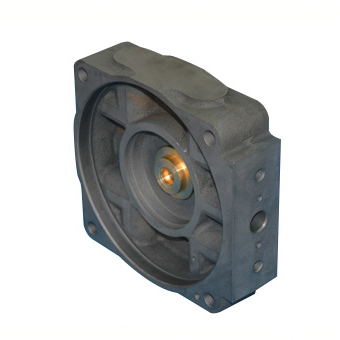
Rail Transit Component Manufacturing — Materials, Standards, And Inspection
What Are Rail Transit Components?
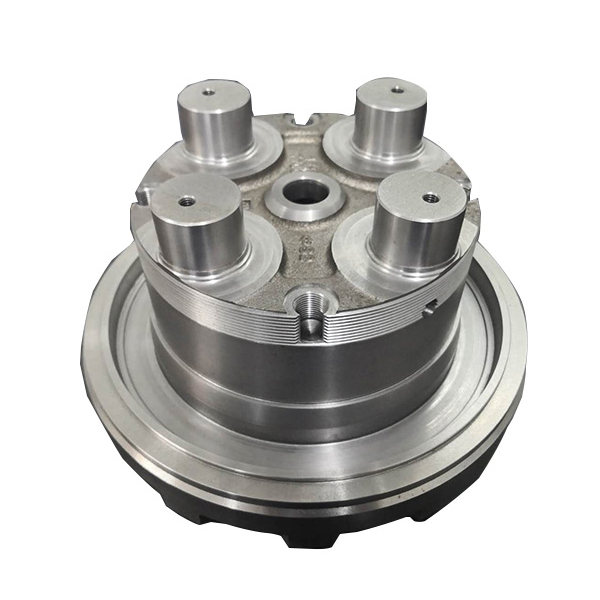
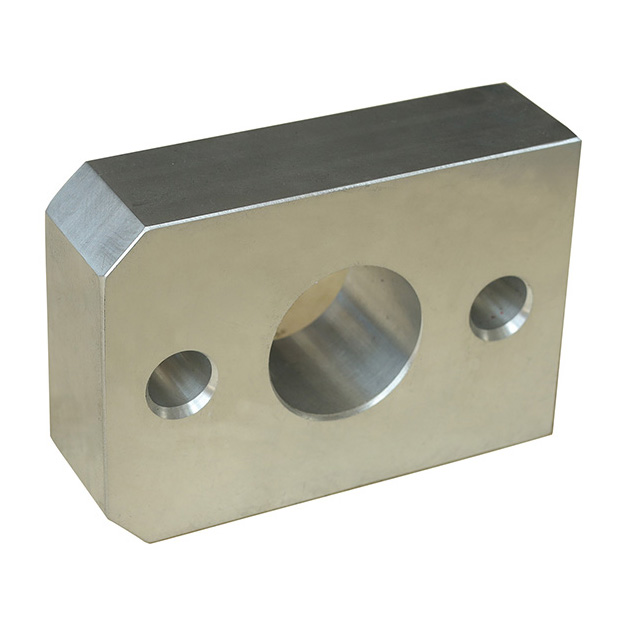
Rail transit components are the parts that make up metro, light rail, high-speed rail, and locomotive vehicles, organized into bogie (running gear), car body, interior, brake, door, and coupler subsystems. Each subsystem has specific material, process, and certification requirements.
Major component categories:
Bogie (running gear). Frame, wheelsets, axles, gearboxes, primary and secondary suspension.
Brake system. Brake discs, brake pads, calipers, brake cylinders, anti-lock valves.
Coupler and draft gear. Coupler head, yoke, draft gear, buffers.
Car body. Side panels, roof panels, underframe, end walls.
Interior fittings. Grab rails, seat frames, luggage racks, partition panels.
Door system. Door panels, hinges, locking mechanisms, operators.
HVAC and electrical. Equipment enclosures, mounting brackets, cable trays.
Of these, bogie frames, brake discs, and couplers are the most demanding in material and qualification terms. Chuangling's Rail Transit Components page documents the typical component range.
What Materials Are Used?
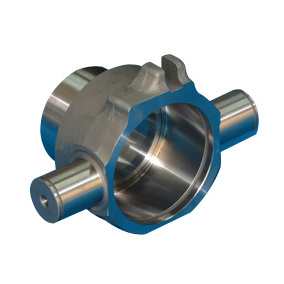
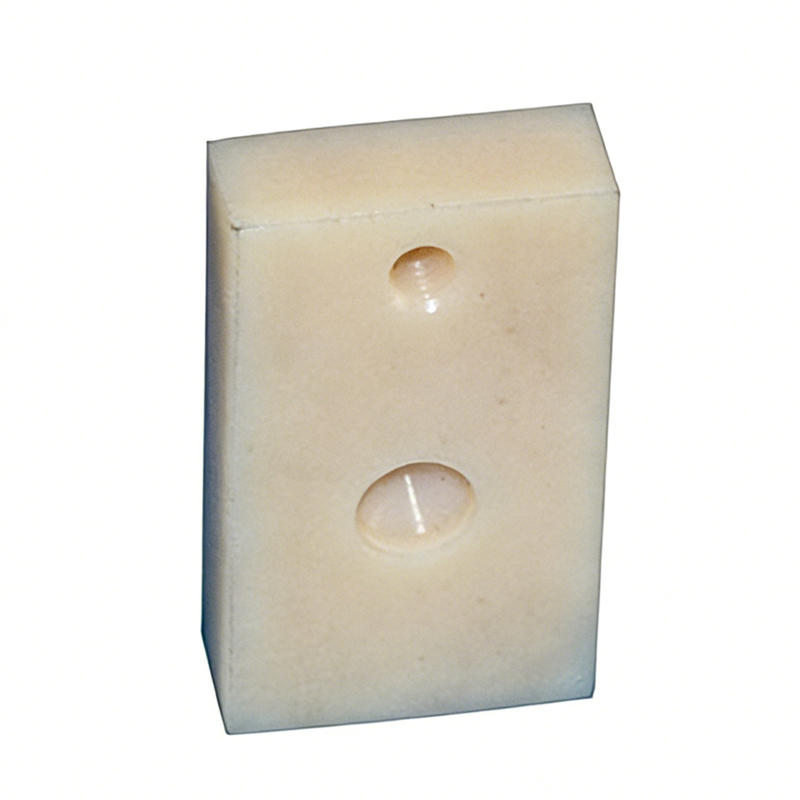
Rail transit components use a range of materials matched to the duty: high-strength alloy steels for structural parts, stainless steel for exterior panels, aluminum alloys for weight reduction, and engineered plastics for interior parts. Material certification and traceability are mandatory.
|
Component |
Typical material |
Standard |
Key property |
|
Bogie frame |
Q355B / S355JR welded |
EN 10025, GB/T 1591 |
High strength-to-weight, weldability |
|
Wheelset axle |
EA1N / LZ45CrV forged |
EN 13261, TB/T 2945 |
Fatigue life, impact resistance |
|
Brake disc |
30CrMoV9 / 42CrMo forged |
EN 13262, TB/T 449 |
Wear resistance, heat dissipation |
|
Coupler head |
Grade E steel cast |
AAR M-201, TB/T 456 |
Impact toughness, fatigue life |
|
Side panel (exterior) |
301L stainless steel |
EN 10088, ASTM A240 |
Corrosion resistance, formability |
|
Interior grab rail |
304 stainless steel |
EN 10088, ASTM A240 |
Corrosion resistance, hygiene |
|
Equipment enclosure |
5052 / 5083 aluminum |
EN 485, ASTM B209 |
Light weight, corrosion resistance |
|
Interior trim |
Fire-retardant FRP, aluminum composite |
EN 45545-2 |
Fire, smoke, toxicity (FST) |
The Chinese TB standards, the European EN standards, and the US AAR standards are the most common references. EN 45545-2 is the European fire-safety standard for rail vehicle materials and is increasingly adopted worldwide.
What Are the Critical Manufacturing Processes?
Rail transit components require tightly controlled processes for forging, casting, welding, machining, and surface treatment, with full traceability of material and process parameters. Each subsystem has its own process flow.
|
Subsystem |
Primary process |
Secondary process |
Critical steps |
|
Bogie frame |
Welding (MIG/MAG) |
Machining |
Weld qualification, post-weld stress relief |
|
Wheelset axle |
Forging |
Heat treatment, machining |
Q&T, UT inspection |
|
Brake disc |
Forging |
Heat treatment, machining |
Q&T, dynamic balance |
|
Coupler |
Casting |
Heat treatment, machining |
Normalizing, impact test |
|
Side panel |
Sheet metal forming |
Welding |
Laser welding, surface finish |
|
Equipment enclosure |
Sheet metal forming |
Welding, painting |
Weld sealing, powder coat |
Chuangling's Forging, Casting, Sheet Metal, CNC Milling, and CNC Turning capabilities cover the full range.
What Are the Key Welding Requirements?
Welding is the most critical process for bogie frames, car body structures, and many rail components — and the most heavily qualified. Weld procedure qualification, welder qualification, and weld inspection are mandatory.
|
Welding requirement |
Standard |
Application |
|
Weld procedure qualification |
EN ISO 15614-1, AWS D1.1 |
All structural welds |
|
Welder qualification |
EN ISO 9606-1, AWS D1.1 |
All welders |
|
Weld inspection (visual) |
EN ISO 17637 |
100% |
|
Weld inspection (penetrant) |
EN ISO 3452-1 |
Critical welds |
|
Weld inspection (UT) |
EN ISO 17640, EN 10160 |
Critical welds, bogie frames |
|
Weld inspection (radiographic) |
EN ISO 17636 |
Selected critical welds |
|
Post-weld stress relief |
EN 1011-2 |
High-strength steel structures |
|
Weld documentation |
EN ISO 3834 |
Quality management |
Chuangling's welding processes are qualified per EN ISO 15614-1 for the major material grades used in rail applications, and the welders are certified per EN ISO 9606-1.
What Are the Tolerance Requirements?
Rail transit components typically require ISO 2768-mK (medium) tolerances for general dimensions and ±0.05–0.10 mm for mating and wear surfaces, with tighter requirements on safety-critical features. The tolerance allocation depends on the function of each feature.
|
Feature type |
Typical tolerance |
Standard reference |
|
Bogie frame machining |
±0.1–0.2 mm |
ISO 2768-mK |
|
Brake disc friction surface |
±0.05 mm flatness |
EN 13262 |
|
Axle bearing seat |
±0.01 mm |
ISO 286 H7/h6 |
|
Coupler mounting face |
±0.1 mm |
AAR M-201 |
|
Side panel edge |
±1.0 mm |
EN 15085 |
|
Door hinge pin |
±0.05 mm |
EN 14752 |
|
Equipment enclosure cutout |
±0.2 mm |
ISO 2768-mK |
Tight tolerances are concentrated on safety-critical features (axle bearing seats, brake disc friction surfaces, coupler mounting). General structural dimensions are held to medium-class tolerances.
What Are the Fire-Safety Requirements?
Rail transit interior materials must comply with EN 45545-2 (or equivalent) for fire, smoke, and toxicity (FST), with hazard levels HL1 to HL3 depending on the application. Compliance is verified by independent testing at an accredited lab.
|
Material |
Hazard level |
Test method |
|
Seat foam |
HL2 |
EN 45545-2 R1 |
|
Interior panel |
HL2 |
EN 45545-2 R1 |
|
Cable insulation |
HL3 |
EN 45545-2 R1 |
|
Floor covering |
HL2 |
EN 45545-2 R1 |
|
Seat frame |
HL1 |
EN 45545-2 R7 |
|
Equipment enclosure |
HL1 |
EN 45545-2 R7 |
Chuangling's engineering team specifies the fire-safety requirement per component per the destination railway's classification (typically HL2 for metro and HL3 for underground metro or high-speed rail).
What Testing and Inspection Are Required?
Rail transit components are tested for material certification, mechanical properties, weld integrity, dimensional accuracy, and dynamic performance. The test program is defined by the customer specification and the rail authority standard.
|
Test |
Purpose |
Frequency |
|
Material certificate |
Verify chemistry and properties |
100% (per heat) |
|
Tensile test |
Verify strength |
Per heat or per batch |
|
Impact test (Charpy) |
Verify toughness at -40 °C or specified temperature |
Per heat or per batch |
|
Hardness test |
Verify heat treatment |
100% on critical parts |
|
UT (ultrasonic) |
Detect internal defects in forgings and welds |
100% on critical features |
|
RT (radiographic) |
Verify weld integrity |
Selected welds |
|
MT / PT |
Detect surface defects |
100% on ferromagnetic parts |
|
Dimensional inspection |
Verify drawing tolerances |
100% |
|
Dynamic balance |
Verify brake disc balance |
100% |
|
Fatigue test |
Verify bogie frame fatigue life |
Prototype and first-article |
|
Fire test |
Verify EN 45545-2 compliance |
Prototype |
Chuangling's Quality system is structured to provide the test certificates, traceability, and documentation required by rail authorities.
How Is Traceability Managed?
Traceability is mandatory for rail transit components — each part must be traceable to its material heat, its process batch, its inspection record, and its installer. The traceability system links the part serial number to a database that records every step.
Traceability requirements:
Material certificate. Mill certificate with heat number, chemistry, and mechanical properties.
Process records. Forging parameters, heat treatment cycle, machining parameters.
Inspection records. Dimensional, hardness, UT, MT, RT as applicable.
Weld records. WPS reference, welder ID, weld map, inspection results.
Assembly records. Sub-component serials, torque values, test results.
Chuangling's traceability system uses serialized identification plates and electronic records that can be exported to the customer's database.
How Are Export Projects Handled?
Rail transit components exported to the EU, USA, or other markets must comply with the destination railway's certification requirements and the local content rules. Common requirements include:
|
Destination |
Standard |
Certification |
|
EU |
EN 15085 (welding), EN 45545-2 (fire) |
CE marking; Notified Body audit |
|
USA |
AAR M-1003, APTA standards |
AAR certification |
|
China |
TB/T standards, CRRC qualification |
CRRC supplier qualification |
|
Southeast Asia |
GB (Chinese) or equivalent |
Local railway authority approval |
Chuangling's export team prepares the certification documents per the destination's requirements.
Frequently Asked Questions
Q: What is the typical lead time for a new rail transit component?
A: For a standard brake disc or bogie bracket in existing material, the lead time is 8–12 weeks from drawing approval to first-article delivery. For new components requiring forging die or casting pattern, add 6–8 weeks.
Q: Can Chuangling manufacture the full bogie assembly?
A: Chuangling supplies the individual bogie components (frame, brackets, machined parts) and can support sub-assembly. The final bogie assembly is typically performed by the rail vehicle OEM or a qualified assembly shop.
Q: What welding processes does Chuangling use?
A: Chuangling uses MIG/MAG, TIG, and spot welding for steel structures; laser welding and resistance welding for sheet metal; and stud welding for fastener attachment. All welders are certified per EN ISO 9606-1.
Q: Can Chuangling produce components in fire-retardant materials?
A: Yes. Chuangling sources fire-retardant plastics, composites, and aluminum composites that comply with EN 45545-2. The fire-test certificates are provided with each shipment.
Q: What documentation is provided with each rail component shipment?
A: Material certificate (mill cert), test reports (tensile, impact, hardness, UT, MT), dimensional inspection report, weld documentation (WPS, welder ID, weld map), certificate of origin, commercial invoice, packing list, and destination-specific certificates (CE, AAR, CRRC).
Q: Can Chuangling produce components for high-speed rail?
A: Yes. High-speed rail components typically require tighter tolerances, more rigorous testing, and additional documentation. Chuangling's Rail Transit Components capability includes high-speed rail applications.
Q: What surface treatments are available for exterior rail components?
A: Chuangling offers powder coating, wet painting, anodizing (for aluminum), and electropolishing (for stainless steel). The choice depends on the corrosion environment, the UV exposure, and the aesthetic requirements.
Q: How is dynamic balance verified for brake discs?
A: Brake discs are balanced on a dynamic balancing machine per EN 13262. The residual unbalance is recorded and must be below the standard's limit (typically G6.3 or G2.5 depending on the service speed).
Q: What is the minimum order quantity for rail components?
A: For standard components, the minimum is typically 10–50 pieces. For custom components, the minimum is set by the tooling cost recovery, typically 50–200 pieces.
Conclusion
Rail transit components demand high-strength materials, tightly controlled processes, and rigorous testing to meet the rail industry's safety and durability standards. Chuangling Machinery's Rail Transit Components capability, supported by Mechanical Equipment Components, Stainless Steel Parts, Forging, and Sheet Metal, covers the full component range from bogie frames to interior fittings. Pair the material and process specification with the Production Equipment review and the Customer references for a complete procurement picture.