Casting Vs Forging Vs CNC Machining — Decision Framework For Custom Components
What Is the Core Difference Between the Three Processes?
Casting pours molten metal into a mold and lets it solidify; forging deforms solid metal under compressive force; CNC machining removes material from a solid blank with a cutting tool. Each process produces a different microstructure and a different range of geometries.
|
Property |
Casting |
Forging |
CNC Machining |
|
Material state |
Molten → solid |
Solid, plastic-deformed |
Solid, cut to shape |
|
Microstructure |
As-cast grains, possible porosity |
Refined grain flow following part contour |
Cut from bar/forging/casting microstructure |
|
Mechanical strength |
Baseline |
+20–40% over casting (grain flow) |
Same as starting stock |
|
Best geometry |
Complex 3D shapes, internal cavities |
Simple-to-moderate shapes |
Any machinable geometry |
|
Typical tolerance |
±0.5–2 mm (as-cast); ±0.1–0.3 mm (machined) |
±0.5–1 mm (as-forged); ±0.05–0.2 mm (machined) |
±0.01–0.1 mm |
|
Minimum batch size |
50–500 (tooling cost recovery) |
100–1000 (die cost recovery) |
1 (no tooling required) |
|
Typical lead time |
6–12 weeks (tooling + first batch) |
6–10 weeks (tooling + first batch) |
1–4 weeks |
The processes are not mutually exclusive: a cast or forged blank is often CNC-machined to add precision features that the primary process cannot achieve.
When Is Casting the Right Choice?
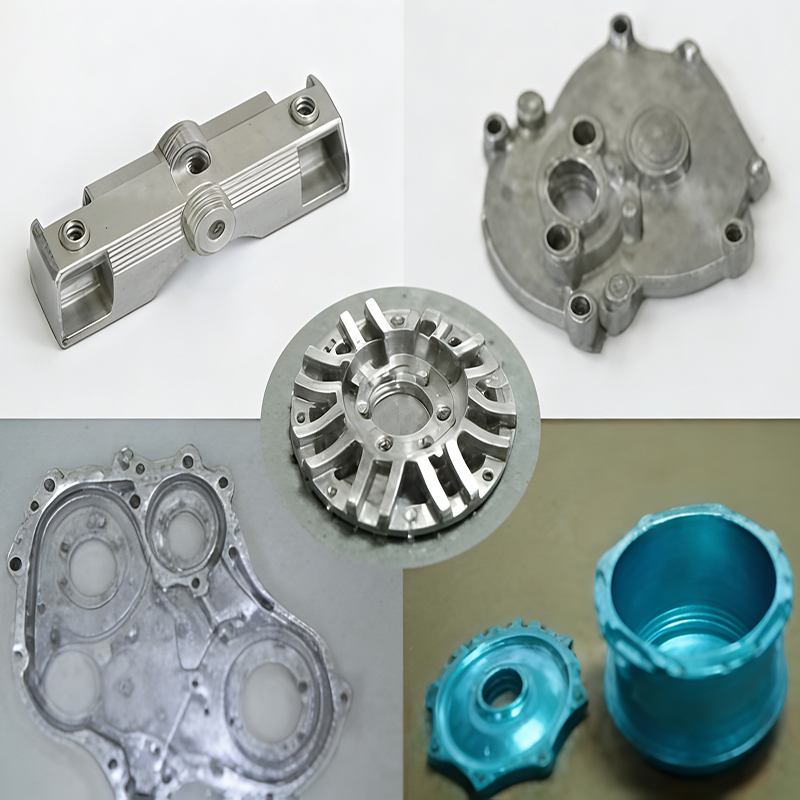
Casting is the right choice when the part has a complex 3D shape that cannot be forged or machined economically, when the batch size is large enough to amortize the tooling, and when the mechanical requirements can be met with as-cast properties. Sand casting, investment casting, and die casting cover most engineering applications.
|
Casting process |
Typical materials |
Typical batch |
Surface finish (as-cast) |
|
Sand casting |
Cast iron, carbon steel, alloy steel, bronze, aluminum |
50–5000 |
Ra 6.3–25 μm |
|
Investment casting (lost-wax) |
Carbon steel, stainless steel, alloy steel, superalloys |
100–10000 |
Ra 1.6–6.3 μm |
|
Die casting (high-pressure) |
Aluminum, zinc, magnesium |
1000–1000000 |
Ra 0.8–3.2 μm |
|
Centrifugal casting |
Cast iron, stainless steel, bronze |
100–5000 |
Ra 3.2–12.5 μm |
Casting's strength is shape complexity: internal cavities, curved surfaces, and integrated features that would require assembly if machined. The trade-off is the need to machine critical surfaces afterward to achieve the final tolerance. Chuangling Machinery's Casting capability covers sand and investment casting with in-house machining for finish operations.
When Is Forging the Right Choice?
Forging is the right choice when the part is safety-critical, load-bearing, and benefits from a refined grain-flow microstructure that follows the part's contour. Open-die forging, closed-die forging, and ring-rolling cover most engineering applications.
|
Forging process |
Typical materials |
Typical weight |
Typical batch |
|
Open-die forging |
Carbon steel, alloy steel, stainless steel, titanium |
1 kg–500 tonnes |
10–500 |
|
Closed-die forging |
Carbon steel, alloy steel, aluminum, brass |
0.1 kg–50 kg |
500–100000 |
|
Ring rolling |
Carbon steel, alloy steel, stainless steel |
1 kg–10 tonnes |
100–5000 |
|
Cold heading |
Carbon steel, stainless steel, aluminum, copper |
0.01 kg–5 kg |
5000+ |
Forging's strength is mechanical performance: grain flow aligned with the principal stress direction yields 20–40% higher fatigue life than an equivalent cast or machined part. The trade-off is the higher tooling cost and the limited geometric complexity compared with casting. Chuangling Machinery's Forging capability covers closed-die forging with pre-machining and finish-machining services.
When Is CNC Machining the Right Choice?
CNC machining is the right choice when the batch size is small (prototype to a few hundred pieces), when the tolerances are tight, when the geometry is straightforward, or when the part is made from bar stock or plate. Machining is the most flexible process.
Typical scenarios for CNC-only parts:
Prototypes and pre-production samples (1–50 pieces).
Low-volume production (50–500 pieces) where tooling cost is not justified.
Tight-tolerance features (±0.01 mm or better).
Parts with simple geometry that can be cut from standard bar stock.
Replacement parts for legacy equipment.
The trade-off is material waste: CNC machining produces chips, and the buy-to-fly ratio (input stock weight to final part weight) can be 3:1 to 10:1. For high-volume production, casting or forging is almost always more economical. Chuangling's CNC Milling and CNC Turning services cover the full machining range.
How Is the Decision Made?
The decision is made by comparing four factors: geometry complexity, mechanical requirements, batch size, and cost target — and matching the strongest factor to the most appropriate process. No single factor decides; the trade-off between them does.
|
Factor |
Casting |
Forging |
Machining |
|
Complex 3D shape (internal cavities, curved surfaces) |
Best |
Limited |
Difficult |
|
High mechanical strength / fatigue life |
Moderate |
Best |
Depends on stock |
|
Tight tolerance (±0.05 mm) |
Requires machining |
Requires machining |
Best |
|
Small batch (<100 pieces) |
High tooling cost |
High tooling cost |
Best |
|
Large batch (>1000 pieces) |
Best |
Good |
High per-piece cost |
|
Short lead time (<4 weeks) |
Difficult |
Difficult |
Best |
|
Material range |
Wide (iron, steel, aluminum, bronze) |
Wide (steel, aluminum, titanium) |
Very wide (any machinable stock) |
The typical decision flow:
If batch size is <100 and tolerances are standard → CNC machining from stock.
If mechanical properties are critical (rotating, fatigue-loaded, safety-critical) → forging.
If geometry is complex (internal cavities, integrated features) → casting.
If both mechanical properties and tight tolerances are required → forging + finish machining, or casting + finish machining.
What Is the Hybrid Approach?
The hybrid approach — cast or forge the near-net shape, then CNC-machine the critical surfaces — is the most common production route for custom components. The primary process delivers the geometry; the secondary process delivers the tolerance.
Hybrid process examples:
Forged blank + CNC finish. Used for safety-critical shafts, flanges, and valve bodies. The forging provides the grain flow; the machining provides the bearing fits and sealing surfaces.
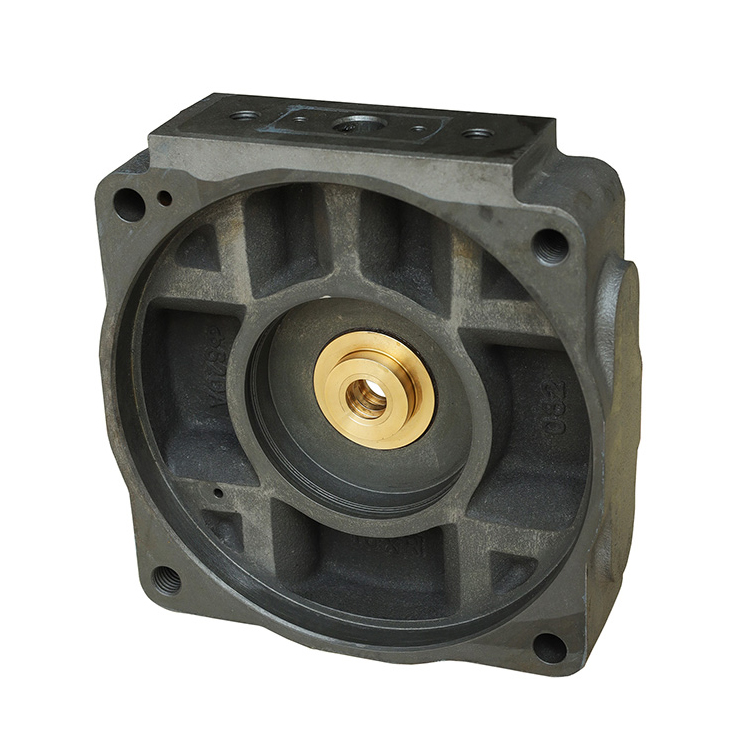
Cast blank + CNC finish. Used for complex housings, pump bodies, and gearbox cases. The casting provides the shape; the machining provides the bearing bores and mounting surfaces.
Cast pre-form + forging finish. Used for high-strength components where the casting provides the rough shape and the forging provides the grain flow in critical sections.
Chuangling Machinery's Casting, Forging, and CNC Machining capabilities are organized to support hybrid processes, with engineering support to sequence the operations.
What Are the Material Limitations?
Each process has a different material range; the choice of process constrains the choice of material, and vice versa. Material-process compatibility is the first filter in the decision.
|
Material family |
Casting |
Forging |
CNC machining |
|
Cast iron (gray, ductile, malleable) |
Excellent |
Limited |
Possible |
|
Carbon steel (low, medium, high carbon) |
Good |
Excellent |
Excellent |
|
Alloy steel (Cr, Ni, Mo, Mn grades) |
Good |
Excellent |
Excellent |
|
Stainless steel (300 and 400 series) |
Good (investment) |
Excellent |
Excellent |
|
Tool steel |
Difficult |
Excellent |
Excellent |
|
Aluminum alloys (3003, 6061, 7075) |
Excellent (die cast) |
Good |
Excellent |
|
Copper alloys (brass, bronze) |
Excellent |
Good |
Excellent |
|
Titanium alloys |
Difficult |
Good |
Excellent |
|
Superalloys (Inconel, Hastelloy) |
Good (investment) |
Good |
Difficult (special tooling) |
The decision is rarely "which material" without "which process." A safety-critical part in 4340 alloy steel almost certainly goes forging; a complex bracket in 6061 aluminum almost certainly goes casting; a prototype in any machinable stock goes CNC.
What Are the Cost Drivers?
Casting's cost driver is tooling amortization; forging's cost driver is die cost and forging cycle time; CNC machining's cost driver is cycle time and material utilization. Understanding the cost driver is the key to right-sizing the process.
|
Cost driver |
Casting |
Forging |
CNC machining |
|
Tooling / die |
2, 000–100,000 |
5, 000–200,000 |
$0 (no tooling) |
|
Per-piece cost (small batch) |
High |
High |
Low–moderate |
|
Per-piece cost (large batch) |
Low |
Low |
High |
|
Material utilization |
70–90% |
80–95% |
30–70% (chips) |
|
Labor content |
Moderate |
Moderate |
High |
|
Energy content |
High (melt) |
Moderate |
Moderate |
For batch sizes <100, the tooling cost of casting or forging often outweighs the per-piece savings; CNC machining wins. For batch sizes >1000, the per-piece savings of casting or forging win; CNC machining becomes prohibitively expensive.
What Standards Govern Process Selection?
Process selection is governed by the application standard (e.g., ASME B16.34 for valves, ASTM A216 for cast steel, ASTM A668 for forged steel) and by the customer's procurement specification. The standard typically defines the acceptable process, the required testing, and the documentation.
|
Standard |
Scope |
Process implication |
|
ASTM A216 |
Steel castings for high-temperature service |
Casting allowed; specific testing required |
|
ASTM A668 |
Steel forgings for general industrial use |
Forging allowed; impact testing may apply |
|
ASTM A743 |
Castings, iron-chromium, iron-chromium-nickel |
Corrosion-resistant castings |
|
ASME B16.34 |
Valves — flanged, threaded, welding end |
Process per material spec |
|
ISO 9001 |
Quality management |
Process controls documented |
|
EN 10213 |
Steel castings for pressure purposes |
Casting; specific testing required |
|
DIN 17100 |
General purpose structural steels |
Material spec; process per part |
Chuangling's Quality documentation is structured to support the testing and traceability requirements of the major international standards.
What Are Common Selection Errors?
Five errors recur across engineering teams when they choose between casting, forging, and machining. Each is preventable with a process review at the drawing stage.
Specifying a forged part when a casting is sufficient. Forging adds cost for non-safety-critical parts; a casting may meet the mechanical requirements at lower cost.
Specifying a casting when a forging is required. Safety-critical parts (rotating shafts, pressure vessels, lifting components) often require forging for fatigue life; specifying casting puts the part at risk.
CNC machining a complex shape from a solid block. When the part has internal cavities or complex contours, casting or forging is more economical than machining from solid.
Ignoring the buy-to-fly ratio. Machining a part from a large bar produces a 5:1 or 10:1 buy-to-fly ratio, wasting material and energy; forging or casting the near-net shape reduces the ratio to 1.2:1 to 2:1.
Skipping the heat treatment step. A forged or cast part often requires heat treatment to achieve the specified mechanical properties. Skipping the heat treatment to save time produces a part that fails in service.
How Does Chuangling Support Process Selection?
Chuangling Machinery supports process selection with engineering review, sample production, and a manufacturing plan that documents the process, the sequence, and the cost. The Company page documents the engineering capacity; the Production Equipment page documents the equipment list.
The selection process:
Receive the drawing, the 3D model, the material spec, the batch size, and the application standard.
Engineering reviews the geometry, the mechanical requirements, and the cost target.
Engineering returns a recommended process (or hybrid process), a sequence, and a cost estimate.
Production produces a sample for approval before the full batch is released.
Quality inspects the sample against the drawing and the standard.
Chuangling's Casting, Forging, and
CNC Milling capabilities are integrated under one engineering roof, simplifying the hybrid-process workflow.
Frequently Asked Questions
Q: What is the smallest batch size that justifies casting?
A: Sand casting tooling can be amortized over 50–100 pieces for simple parts; investment casting tooling is more expensive and typically requires 100–500 pieces. For batches below 50, machining from stock is usually more economical.
Q: What is the smallest batch size that justifies forging?
A: Closed-die forging tooling is expensive; the typical minimum is 100–500 pieces depending on part size and complexity. Open-die forging has lower tooling cost and is viable for batches as small as 10 pieces for heavy industrial parts.
Q: Can cast parts be heat treated?
A: Yes, cast parts are commonly heat treated to refine the grain structure, relieve internal stresses, and improve mechanical properties. Common heat treatments for cast steel include normalizing, quenching and tempering, and annealing.
Q: Can forged parts be welded?
A: Yes, but the weld area must be heat treated after welding to restore the mechanical properties. Forging suppliers typically provide pre-welding and post-welding procedures that must be followed to maintain the part's certification.
Q: What is the typical lead time for a new casting?
A: Sand casting tooling: 4–6 weeks; first batch: 2–4 weeks after tooling approval. Investment casting tooling: 6–8 weeks; first batch: 2–4 weeks. Die casting tooling: 8–12 weeks; first batch: 2–4 weeks.
Q: What is the typical lead time for a new forging?
A: Open-die forging: 4–8 weeks for die design and first batch. Closed-die forging: 8–12 weeks for die design and first batch. Ring rolling: 4–8 weeks.
Q: What is the buy-to-fly ratio for a typical machined part?
A: For turned parts from bar stock, the buy-to-fly ratio is typically 1.5:1 to 3:1. For milled parts from plate or block, the ratio is typically 3:1 to 10:1. For complex aerospace or medical parts, the ratio can exceed 20:1.
Q: How does Chuangling select between casting, forging, and machining?
A: The selection is driven by the geometry, the mechanical requirements, the batch size, the cost target, and the application standard. The engineering team returns a recommended process, a manufacturing plan, and a cost estimate for review before production begins.
Q: Can Chuangling produce both cast and machined parts in one order?
A: Yes. Chuangling produces the cast or forged blank and machines the critical features in-house, simplifying logistics and ensuring the heat-treatment and machining steps are sequenced correctly.
Conclusion
Casting, forging, and CNC machining are complementary processes, not competing ones. The right selection matches the part's geometry, mechanical requirements, batch size, and cost target to the process's strengths. Chuangling Machinery's Casting, Forging, CNC Milling, and CNC Turning capabilities cover all three primary routes plus the hybrid turn-mill-grind workflow. Pair the process selection with the Engineering Machinery Components and Mechanical Equipment Components case studies and the Customer references for a complete procurement picture.