Comprehensive Analysis Of Machining: Processes, Technical Key Points, And Industry Application Guide
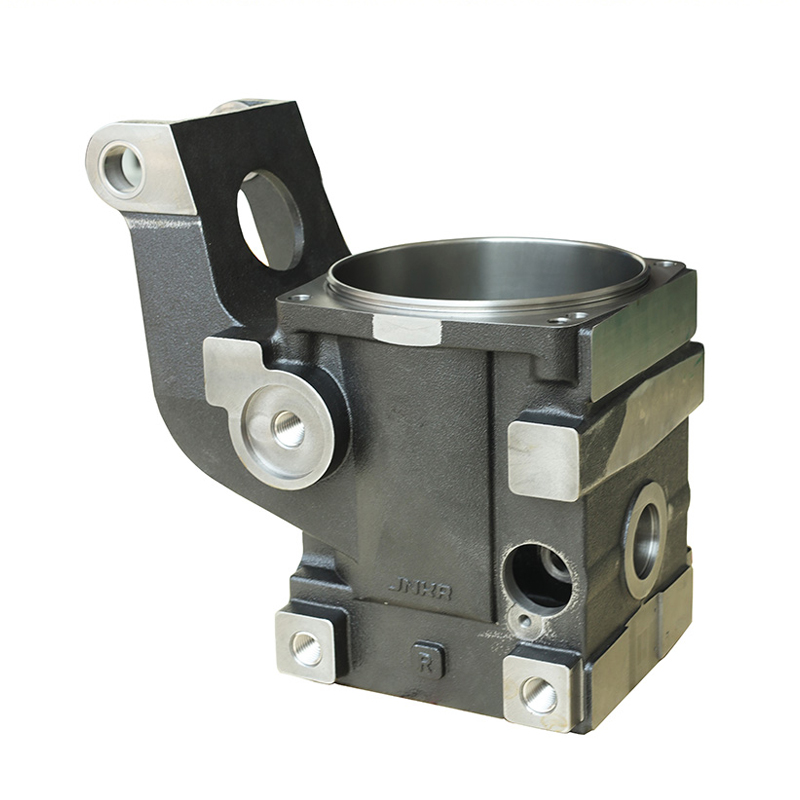
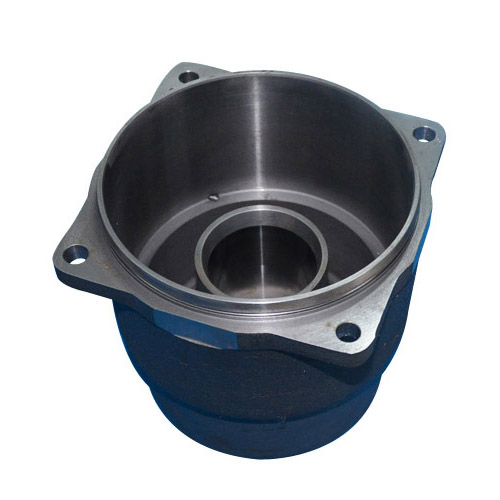
Machining is the core cornerstone of manufacturing, involving the precise cutting, grinding, or shaping of raw materials using various mechanical equipment to transform metals, plastics, and other materials into industrial workpieces that meet shape, size, and performance requirements. From precision crankshafts in automobile engines to wing structural components in aerospace, and the sharp edges of medical surgical instruments, almost all industrial products rely on machining—it is the critical bridge connecting raw materials to finished products.
I. Wide Applications of Machining: Penetrating All Core Industrial Fields
The value of machining lies in its control over precision and consistency, making it a must-have for multiple high-demand industries:
- Automotive Industry: Key parts such as engine blocks, transmission gears, and chassis suspension components require turning and milling to ensure dimensional accuracy, guaranteeing vehicle power and safety.
- Aerospace Industry: Components like wing skins, engine blades, and satellite brackets have extremely high requirements for material strength and geometric tolerance, relying on five-axis machining centers to achieve precise cutting of complex surfaces.
- Electronics Industry: Precision parts such as chip packaging bases, mobile phone connectors, and computer hard disk shafts require CNC lathes or electrical discharge machining to ensure micron-level accuracy.
- Medical Industry: Products like surgical knife handles, implantable steel plates, and dental implants must not only meet biocompatibility but also undergo polishing and passivation to eliminate sharp edges, ensuring safe use.
II. Core Processes of Machining: 6-Step Breakdown from Raw Material to Finished Product
The essence of
machining is precisely removing excess material, but to obtain qualified workpieces, a standardized process of from rough to fine, and from basic to precise must be followed:
1. Raw Material Preparation: Choosing the Right Material is the First Step
Before processing, suitable raw materials (metals such as steel, aluminum, copper; non-metals such as engineering plastics, ceramics) must be selected based on the workpiece's application scenario (e.g., heat-resistant alloys for high-temperature environments, high-strength steel for load-bearing components) and cost budget (e.g., aluminum alloy is more economical than titanium alloy).
2. Process Design: Drawing the Precision Blueprint for Machining
Process design is the brain of machining, requiring a plan based on three key elements:
- Workpiece Characteristics: Shape (complex surfaces vs. simple planes), size (1-meter-long shafts vs. 10-millimeter screws), precision (±0.01mm for aerospace parts vs. ±0.1mm for ordinary parts);
- Material Properties: For example, stainless steel tends to stick to tools, requiring coated cutters; titanium alloy has poor thermal conductivity, requiring high-pressure coolant;
- Production Requirements: Dedicated machine tools for mass production, machining centers for small-batch, multi-variety production.
Finally, determine the processing methods (turning, milling, drilling), cutting parameters (rotational speed, feed rate, cutting depth), and process route (rough machining first, then finishing; planar machining first, then hole machining).
3. Workpiece Clamping: Fixation is the Premise of Precision
The purpose of clamping is to stably fix the workpiece on the machine tool to avoid displacement or vibration during processing. Fixtures should be selected based on the workpiece shape:
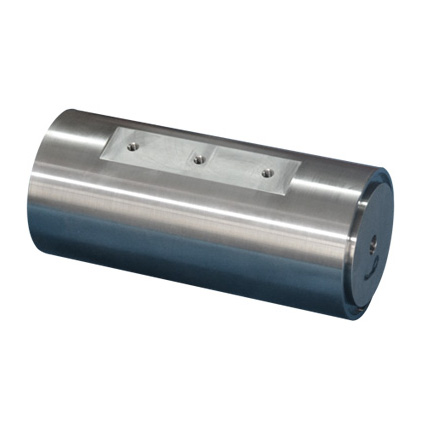
- Three-jaw chucks for cylindrical workpieces (e.g., shaft parts);
- Press bolts for flat workpieces (e.g., box-type parts);
- Hydraulic fixtures for precision parts (to ensure uniform clamping force).
Attention must be paid to the positioning datum (e.g., using the workpiece's bottom or side as a reference surface) to ensure the processed dimensions match the design.
4. Cutting Processing: The Core Action of Removing Excess Material
Precise removal of excess material is achieved through the relative movement of tools and workpieces. Common methods include:
- Turning: Processing rotating parts (e.g., shafts, disks, sleeves) by rotating the workpiece and moving the tool;
- Milling: Processing planes, grooves, or complex surfaces (e.g., gears, molds) by rotating the tool and moving the workpiece;
- Drilling/Boring: Processing hole parts (e.g., screw holes, bearing holes);
- Grinding: Improving surface precision (e.g., bearing inner/outer rings, machine tool guide rails), capable of reducing surface roughness to below Ra0.1μm.
5. Inspection and Quality Control: The Last Line of Defense for Finished Products
After processing, measuring tools are used to verify workpiece qualification:
- Dimensional inspection: Vernier calipers and micrometers for length/diameter; coordinate measuring machines for geometric tolerances (e.g., roundness, parallelism);
- Surface inspection: Roughness meters for surface smoothness; flaw detectors for internal defects (e.g., cracks, pores).
If issues are found (e.g., dimensional deviations, surface scratches), processing parameters must be adjusted promptly (e.g., reducing feed rate, replacing tools) or the workpiece repaired to ensure zero defective products.
6. Post-Processing: Making the Workpiece More Perfect
The final step is crucial for improving performance and safety:
- Cleaning: Removing chips and coolant residues (e.g., ultrasonic cleaning for precision parts);
- Deburring: Eliminating sharp edges after processing (e.g., vibratory finishing or electrochemical deburring);
- Heat Treatment: Altering material properties (e.g., quenching to increase hardness, annealing to relieve internal stress);
- Surface Treatment: Rust prevention (galvanizing), wear resistance (shot peening), aesthetics (painting).
III. Key Technical Points of Machining: Core Secrets to Improve Efficiency and Quality
To achieve high quality, high efficiency, and low cost processing, the following core points must be mastered:
1. Equipment Selection: Matching Requirements is Key
- CNC machine tools (e.g., machining centers, CNC lathes) for high-precision parts to ensure micron-level accuracy;
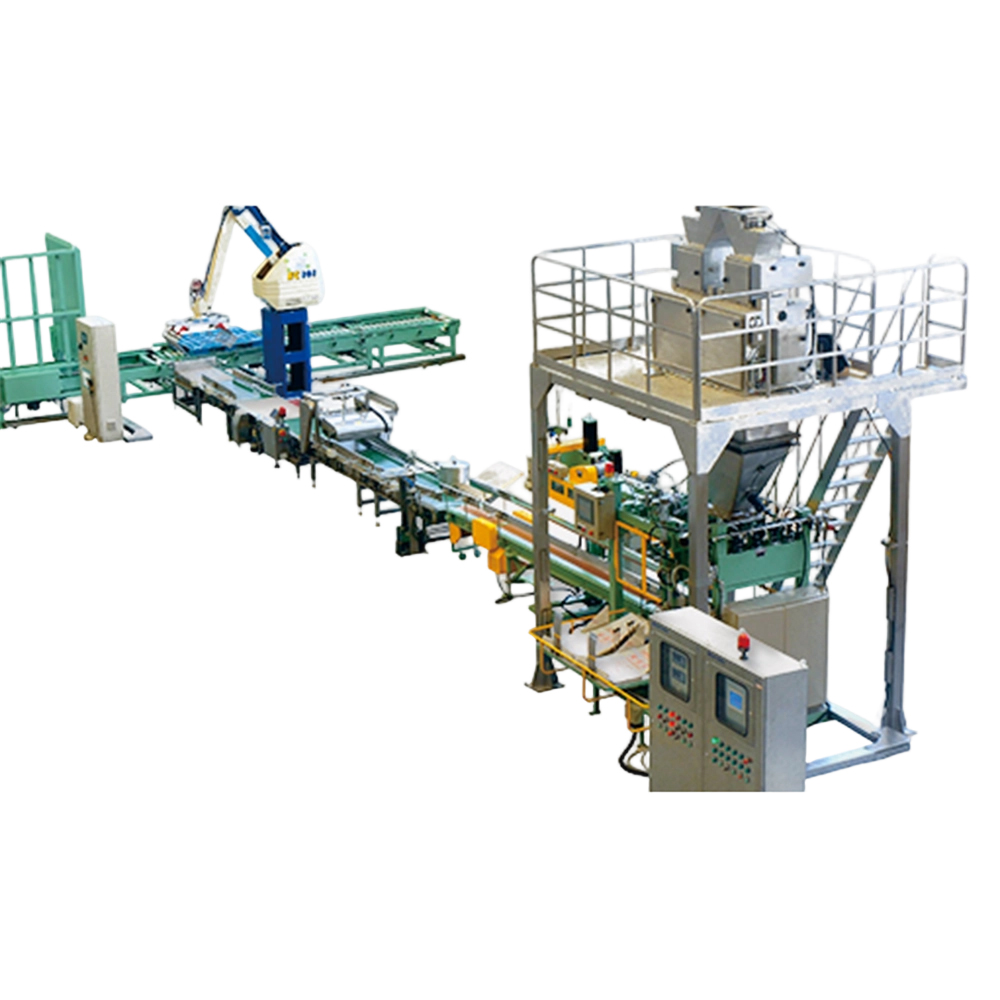
- Automatic production lines (e.g., dedicated machine tools for auto parts) for mass production to increase capacity;
- Five-axis machining centers for complex surfaces, enabling multi-sided processing in one clamping to reduce errors.
2. Material Performance Evaluation: Understanding the Temperament of Materials
Different materials have significant differences in cutting characteristics:
- Aluminum alloy: Easily deformed, requiring controlled cutting temperature (using coolant or high-speed, low-feed rates);
- Stainless steel: Prone to tool sticking, requiring coated cutters (e.g., TiAlN coating);
- Titanium alloy: High hardness and poor thermal conductivity, requiring high-rigidity tools and high-pressure cooling.
3. Process Route Optimization: Reducing Waste and Improving Efficiency
Follow the principle of rough before fine, surface before hole, datum before others:
- Rough machining first to remove 80%~90% of the allowance, then finishing to ensure precision and reduce deformation;
- Machine planes first (e.g., the bottom surface of a box), then use the plane as a datum to machine holes, ensuring hole position accuracy.
4. Surface Treatment: Putting Protective Clothing on the Workpiece
Select surface treatments based on workpiece needs:
- Rust prevention: Galvanizing, chrome plating (e.g., automotive chassis parts);
- Wear resistance: Carburizing, quenching (e.g., gears, bearings);
- Aesthetics: Painting, anodizing (e.g., mobile phone casings);
- Biocompatibility: Polishing, passivation (e.g., medical implants).
5. Production Management and Quality Assurance: Details Determine Success or Failure
- Implement lean production: Reduce equipment changeover time (e.g., quick die change) and minimize waiting waste;
- Establish a quality traceability system: Track each workpiece's processing links with barcodes or RFID to quickly locate issues;
- Regularly maintain equipment: Calibrate machine tool accuracy, replace worn tools, and ensure processing stability.
Conclusion: Machining is the Heart of Manufacturing
From automotive to aerospace, electronics to medical, machining runs through the core links of almost all industrial fields. Mastering precise process control and flexible application of technical key points can not only improve workpiece quality and production efficiency but also help enterprises gain an advantage in fierce market competition.
For machining practitioners, continuous learning and optimization are eternal themes—after all, every precise cutting action epitomizes precision manufacturing in the manufacturing industry.