Gross Weight Scale Packaging Machine: Principle, Features And Applications
The gross weight scale packaging machine is a practical semi-automatic packaging solution widely used in bulk material packaging industries. Different from traditional net weight packaging equipment that adopts separate weighing hoppers for pre-weighing, this advanced gross weight packaging system features a streamlined structural design and efficient working logic. It completes synchronous weighing and filling by measuring the total weight of materials and packaging bags, delivering stable, cost-effective and high-efficiency packaging performance for various granular, powdery and bulk materials.
Unique Working Principle of Gross Weight Scale Packaging Machine
The core advantage of the
gross weight scale packaging machine lies in its hopper-free feeding structure. The equipment cancels the traditional weighing hopper at the bottom of the feeding machine, eliminating intermediate material transfer links. During operation, materials are directly conveyed and injected into the pre-opened packaging bag, while the high-precision weighing system synchronously weighs the entire load of materials and packaging bags to realize accurate gross weight metering.
This integrated weighing and filling mode simplifies the overall packaging process and avoids material residue, weighing errors and equipment failures caused by intermediate hopper transfer. Equipped with high-sensitivity load cell sensors, the system monitors weight changes in real time during feeding, automatically adjusts the feeding speed, and stops feeding precisely when reaching the preset gross weight standard, ensuring consistent packaging weight for every finished bag.
Standard Semi-Automatic Packaging Workflow
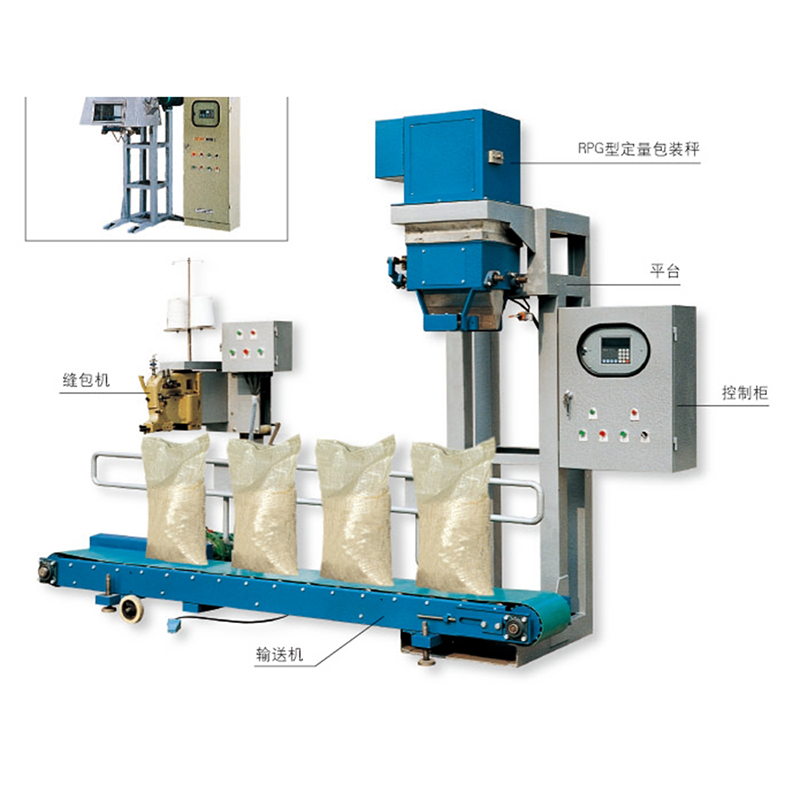
Matched with supporting conveyor belts and bag sewing machines, the gross weight scale packaging machine forms a complete semi-automatic packaging production line for prefabricated open-mouth bags. It adopts a mode of manual auxiliary bag loading + automatic equipment operation, with a standardized and efficient workflow that balances operating flexibility and production efficiency.
The entire packaging process follows a fixed and reliable sequence. First, workers manually sleeve the prefabricated packaging bag on the equipment’s bag clamping position. After the bag induction is completed, the machine automatically clamps the bag mouth tightly to prevent material leakage during filling. Subsequently, the automatic feeding system starts quantitative material filling. When the gross weight reaches the set value, the equipment stops feeding immediately and automatically releases the filled material bag. Finally, workers simply tidy up the bag mouth and send the bag to the matching sewing machine for sealing, completing the whole packaging process.
Core Advantages of Gross Weight Scale Packaging Equipment
1. Simplified Structure and Low Maintenance Cost
Without a weighing hopper structure, the equipment has fewer wearing parts and a more compact overall structure. It effectively reduces the failure rate of material blockage, residue and leakage, and lowers daily maintenance and cleaning costs. The streamlined mechanical design also saves production space, making it suitable for small and medium-sized production workshops and flexible production scenarios.
2. Stable Weighing and High Operational Efficiency
The synchronous gross weight weighing method realizes one-step molding of filling and weighing, avoiding weight deviation caused by secondary material transfer in net weight packaging equipment. The semi-automatic operation mode reduces manual intervention in core links such as feeding and metering, greatly improving packaging efficiency while ensuring stable weighing accuracy. It can continuously and stably complete batch packaging operations.
3. Flexible Operation and Wide Compatibility
The equipment is suitable for most conventional prefabricated open-mouth packaging bags and can adapt to the packaging needs of various bulk materials including grain, feed, fertilizer, chemical raw materials and building materials. The manual bagging and finishing design allows flexible adjustment according to different bag types and material characteristics, with strong adaptability and low operation threshold for workers.
Industrial Application Scenarios
Thanks to its simple operation, stable performance and cost-effective advantages, the gross weight scale packaging machine has become a mainstream packaging device in many industries. It is widely applied in the quantitative packaging of granular and powdery materials in agriculture, chemical industry, food processing, building materials and feed production. Whether for small-batch flexible production or medium and large-batch continuous packaging, this semi-automatic gross weight packaging equipment can perfectly meet production demands and help enterprises improve packaging standardization and production efficiency.
Final Thoughts
The gross weight scale packaging machine breaks the structural limitations of traditional weighing packaging equipment with its hopper-free direct feeding and gross weight synchronous weighing technology. Its semi-automatic working mode, which combines manual auxiliary operation and automatic mechanical execution, achieves an optimal balance between equipment cost, production efficiency and packaging accuracy. For bulk material packaging enterprises pursuing stable performance, low maintenance and high cost performance, this type of packaging scale is a reliable and practical production equipment choice.