Sheet Metal Vs CNC Machining For Brackets, Enclosures, And Structural Components
What Is the Core Difference Between Sheet Metal and CNC Machining?
Sheet metal fabrication cuts, bends, and joins thin-gauge plate stock (typically 0.5–6 mm) into prismatic or formed shapes; CNC machining removes material from solid stock (plate, bar, or block) to create the part's geometry. The difference in starting material defines what each process can do economically.
|
Property |
Sheet metal fabrication |
CNC machining |
|
Starting material |
Plate or sheet (0.5–6 mm typical) |
Plate, bar, or block (5–500+ mm) |
|
Material utilization |
70–90% (nesting on sheet) |
30–70% (chips and offcuts) |
|
Wall thickness |
Equal to material thickness |
Variable (machined to drawing) |
|
Best geometry |
Prismatic, formed, bent |
Any machinable geometry |
|
Typical tolerance |
±0.1–0.5 mm |
±0.01–0.1 mm |
|
Surface finish from process |
Ra 1.6–6.3 μm |
Ra 0.8–3.2 μm |
|
Minimum batch size |
1–10 (laser cutting is fast) |
1 (no tooling) |
|
Typical batch size |
50–10000 |
1–500 |
|
Lead time (no tooling) |
1–2 weeks |
1–3 weeks |
|
Lead time (with tooling) |
4–8 weeks (stamping dies) |
4–6 weeks (fixturing) |
Each process has clear strengths; the wrong choice wastes material, time, and cost.
When Is Sheet Metal the Right Choice?
Sheet metal is the right choice when the part has uniform wall thickness, can be made from plate stock, has a prismatic or formed geometry, and the batch size is large enough to justify the laser/plasma cutting setup. Sheet metal delivers the lowest per-piece cost for thin-walled, repeatable parts.
Typical sheet metal applications:
Equipment enclosures and cabinets.
Mounting brackets and chassis plates.
Covers, guards, and access panels.
Control panels and operator consoles.
Ductwork, hoppers, and material-handling components.
Cable trays and electrical enclosures.
Sheet metal's strengths are material efficiency (nesting on the sheet) and cycle time (laser cutting at high speed). The trade-offs are uniform wall thickness and limited geometric complexity compared with machined parts.
When Is CNC Machining the Right Choice?
CNC machining is the right choice when the part has variable wall thickness, complex 3D geometry, tight tolerances on mating surfaces, or features that cannot be made by bending. Machining is the most flexible process for low-volume, high-complexity parts.
Typical CNC-machined applications:
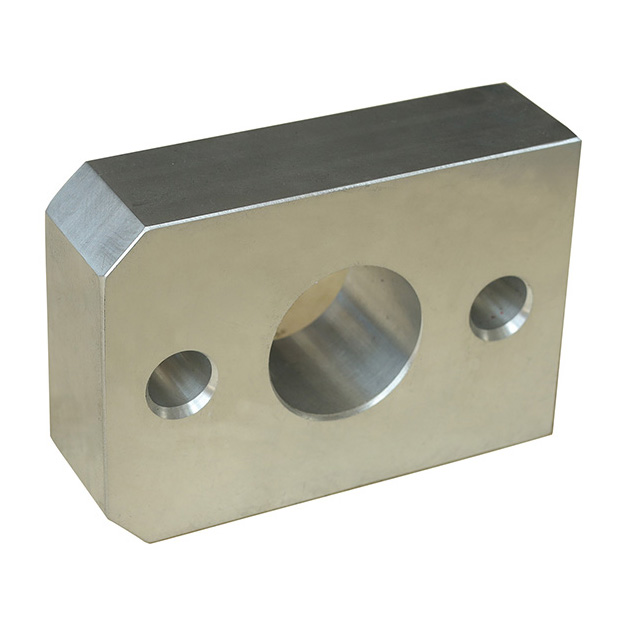
Mounting brackets with milled pockets for weight reduction.
Manifolds with intersecting drilled and milled passages.
Precision plates with tight flatness and parallelism.
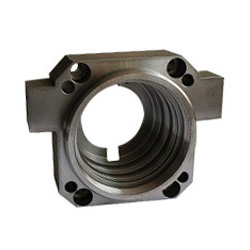
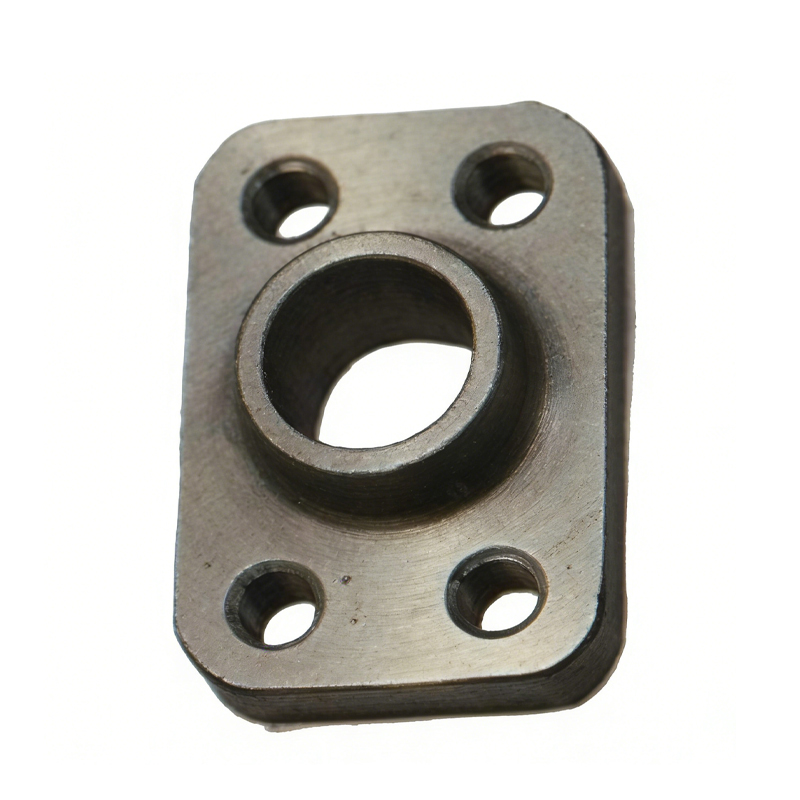
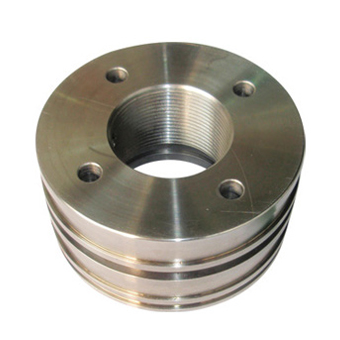
Gear blanks, flanges, and hubs with bolted features.
Jigs, fixtures, and tooling plates.
Prototype parts with complex geometry.
Machining's strengths are geometric flexibility, tight tolerance, and the ability to use solid bar stock for high-strength applications. The trade-off is material waste and cycle time for simple prismatic shapes.
What Is the Cost Comparison?
For thin-walled prismatic parts in medium-to-high volume, sheet metal is typically 30–60% cheaper than CNC machining; for complex 3D parts in low volume, CNC machining is typically cheaper than sheet metal because the stamping or forming tooling is not justified. The breakeven batch size depends on the part's complexity.
|
Cost driver |
Sheet metal |
CNC machining |
|
Tooling / setup |
Laser cutting: low; Stamping: high |
Fixturing: low to moderate |
|
Per-piece cost (small batch) |
Moderate |
High |
|
Per-piece cost (large batch) |
Low (laser); very low (stamping) |
High (no economy of scale) |
|
Material cost |
Plate cost per kg |
Bar/block cost per kg (higher waste) |
|
Labor cost |
Moderate (cutting + bending + welding) |
High (setup + cycle time) |
|
Finishing cost |
Painting or powder coating |
None or light deburring |
For 100-piece batches, the choice depends on the part. For 1000-piece batches, sheet metal wins on simple prismatic parts; CNC machining remains competitive only for complex machined features.
What Are the Material Options?
Sheet metal and CNC machining cover overlapping but different material ranges, with sheet metal having a wider range of thicknesses and CNC machining a wider range of grades. The material choice drives the process selection.
|
Material family |
Sheet metal gauge range |
CNC machining stock range |
|
Mild steel (Q235, A36) |
0.5–6 mm |
5–200+ mm |
|
Stainless steel (304, 316) |
0.5–4 mm |
5–100+ mm |
|
Aluminum (5052, 6061) |
0.5–6 mm |
5–200+ mm |
|
Galvanized steel |
0.5–3 mm |
Not common |
|
Copper / brass |
0.5–3 mm |
5–100 mm |
|
Pre-painted steel |
0.4–1.5 mm |
Not common |
Sheet metal's gauge range makes it ideal for enclosures and brackets where weight matters. CNC machining's stock range makes it ideal for structural components where stiffness and strength matter.
What Sheet Metal Operations Are Used?
Sheet metal fabrication uses cutting, bending, and joining as the primary operations, with finishing (painting, plating, anodizing) as the secondary step. Each operation has specific tooling and capability.
|
Operation |
Typical equipment |
Tolerance |
Notes |
|
Laser cutting |
Fiber laser or CO₂ laser |
±0.1 mm |
Fast, accurate, narrow kerf |
|
Plasma cutting |
CNC plasma |
±0.5 mm |
For thicker steel (> 6 mm) |
|
Waterjet cutting |
Abrasive waterjet |
±0.1 mm |
No heat-affected zone |
|
Bending |
CNC press brake |
±0.1 mm (angle), ±0.5 mm (linear) |
Bend radius 1× thickness min |
|
Punching |
CNC turret punch |
±0.1 mm |
Fast for repeated features |
|
Welding (MIG/TIG) |
Robotic or manual |
Per welding standard |
For assembly and seams |
|
Hardware insertion |
Press or self-clinching |
Per hardware spec |
For PEM studs, captive screws |
|
Powder coating |
Curing oven |
n/a |
Standard finish for enclosures |
|
Wet painting |
Spray booth |
n/a |
For color match or large parts |
|
Anodizing (aluminum) |
Chemical bath |
n/a |
For corrosion resistance + color |
|
Galvanizing |
Hot-dip or electro |
Per ASTM A123 |
For corrosion resistance |
Chuangling's Sheet Metal Component capability covers all these operations in-house.
What CNC Machining Operations Are Used?
CNC machining uses milling, turning, drilling, and tapping as the primary operations, with finishing (deburring, surface treatment) as the secondary step. Each operation has specific tooling and capability.
|
Operation |
Typical machine |
Tolerance |
Notes |
|
Milling |
3-axis or 5-axis VMC |
±0.02–0.10 mm |
For prismatic features |
|
Turning |
2-axis lathe |
±0.01–0.05 mm |
For rotational features |
|
Drilling |
Machining center |
±0.05 mm |
Standard feature |
|
Tapping |
Machining center |
Per thread spec |
Standard feature |
|
Boring |
Machining center |
±0.01 mm |
For precision bores |
|
Counterboring / spotfacing |
Machining center |
±0.05 mm |
For bolt-head clearance |
|
Reaming |
Machining center |
±0.01 mm |
For precision holes |
|
Surface grinding |
Surface grinder |
±0.005 mm |
For flat references |
|
Cylindrical grinding |
Cylindrical grinder |
±0.005 mm |
For bearing journals |
Chuangling's CNC Milling, CNC Turning, and CNC Grinding capabilities cover all these operations in-house.
What Are the Tolerance Differences?
Sheet metal typically holds ±0.1–0.5 mm on linear dimensions and ±0.5° on bend angles; CNC machining typically holds ±0.01–0.1 mm on linear dimensions and ±0.1° on machined features. The choice depends on the part's functional tolerances.
|
Tolerance class |
Sheet metal |
CNC machining |
|
Linear (general) |
±0.5 mm |
±0.05 mm |
|
Linear (precision) |
±0.1 mm |
±0.02 mm |
|
Bend angle |
±0.5° |
±0.1° |
|
Hole position |
±0.2 mm |
±0.05 mm |
|
Flatness |
0.5 mm/m |
0.05 mm/m |
|
Surface finish |
Ra 3.2 μm (as-cut) |
Ra 1.6 μm (as-machined) |
If the drawing requires ±0.05 mm flatness, the part must be machined; sheet metal cannot achieve it. If the drawing requires ±1.0 mm on a sheet metal bracket, sheet metal is the cheaper choice.
What Are the Joining Options?
Sheet metal and CNC-machined parts use different joining methods based on the material and the duty. Sheet metal favors welding, riveting, and hardware insertion; machined parts favor threaded fasteners and press fits.
|
Joining method |
Sheet metal application |
CNC machined application |
|
MIG/MAG welding |
Standard for steel sheet |
For machined weldments |
|
TIG welding |
Stainless, aluminum |
For stainless, aluminum |
|
Spot welding |
Thin sheet steel |
Less common |
|
Riveting |
Aluminum, stainless sheet |
For hinges, brackets |
|
PEM studs |
For sheet metal assembly |
Less common |
|
Captive screws |
For sheet metal assembly |
Less common |
|
Threaded fasteners |
Standard for assembly |
Standard for assembly |
|
Press fits |
For sheet metal bushings |
For bearing seats |
|
Adhesive bonding |
For composite panels |
For inserts |
For sheet metal, welding is the standard for steel and stainless; riveting and hardware insertion are standard for aluminum and stainless where welding is not desired.
What Are the Common Selection Errors?
Five errors recur across engineering teams when they choose between sheet metal and CNC machining. Each is preventable with a process review at the drawing stage.
Machining a thin-walled enclosure from solid block. A 1.5 mm wall enclosure machined from a 100 mm block of aluminum produces 98% chips; sheet metal would produce 5–10% scrap.
Sheet metal a part that needs variable wall thickness. A manifold with intersecting passages cannot be made from sheet metal without multiple welded sub-assemblies; CNC machining is the right choice.
Ignoring the bend radius. Sheet metal has a minimum bend radius (typically 1× material thickness); tighter radii crack or deform the material.
Ignoring the flatness requirement. Sheet metal cannot achieve machined flatness without additional straightening; specifying ±0.05 mm flatness on a sheet metal part forces costly post-processing.
Choosing sheet metal for low-volume parts. For batches below 50 pieces, sheet metal setup time (laser, brake) often exceeds CNC machining setup time; CNC is more responsive for prototypes.
What Is the Hybrid Approach?
The hybrid approach — sheet metal body with machined features, or machined body with sheet metal brackets — is the most common production route for complex assemblies. Each process is used for its strength.
|
Hybrid component |
Sheet metal part |
CNC machined part |
|
Equipment enclosure |
Body, panels, doors |
Mounting brackets, hinge pins |
|
Industrial control panel |
Body, sub-panel |
Back plate, terminal blocks |
|
Medical instrument |
Sheet metal covers |
Internal frame, mounting plates |
|
Material handling conveyor |
Sheet metal guards |
Drive brackets, bearing housings |
|
Packaging machine |
Sheet metal frame |
Adjustment knobs, fasteners |
Chuangling's Sheet Metal Component, CNC Milling, and Structural Component capabilities are structured to support hybrid assemblies.
Frequently Asked Questions
Q: What is the minimum bend radius for sheet metal?
A: The minimum bend radius is typically 1× the material thickness for soft materials (aluminum, mild steel) and 1.5–2× for harder materials (stainless, high-carbon steel). Tighter radii crack the material on the outside of the bend.
Q: What is the maximum sheet metal thickness Chuangling can process?
A: Chuangling's laser cutting capacity extends to approximately 12 mm for carbon steel, 6 mm for stainless steel, and 6 mm for aluminum. For thicker plate, plasma cutting or waterjet cutting is used.
Q: Can Chuangling produce sheet metal parts with powder coating?
A: Yes. Chuangling offers powder coating in a range of standard colors (RAL) and custom color matches. The powder coat is applied after fabrication and cured in an oven.
Q: What is the typical tolerance for laser-cut sheet metal parts?
A: Laser-cut parts typically hold ±0.1 mm on linear dimensions and ±0.2 mm on hole positions, depending on the material thickness and the laser setup. Tighter tolerances require precision machining after cutting.
Q: What is the difference between sheet metal and plate metal?
A: Sheet metal is typically ≤ 6 mm thick; plate metal is > 6 mm. Sheet metal is bent and formed; plate metal is usually machined or welded. Some fabricators use "plate" for any thickness above 3 mm.
Q: What is the typical lead time for a sheet metal prototype?
A: For a laser-cut and bent prototype (1–10 pieces), the lead time is 1–2 weeks. For a stamped prototype (with tooling), the lead time is 4–8 weeks.
Q: What is the typical lead time for a CNC-machined prototype?
A: For a CNC-machined prototype (1–10 pieces), the lead time is 1–3 weeks. The setup and programming are the bulk of the time; the cycle time per piece is small.
Q: Can Chuangling produce welded assemblies?
A: Yes. Chuangling's welding capability includes MIG, TIG, and spot welding for steel, stainless, and aluminum. Welds are qualified per AWS D1.1 (steel) or AWS D1.6 (stainless) and inspected per the customer's requirements.
Q: Can Chuangling produce aluminum sheet metal parts?
A: Yes. Chuangling produces aluminum sheet metal parts from 5052 and 6061 alloys, with laser cutting, bending, welding, and anodizing. The parts are used in equipment enclosures, brackets, and panels.
Conclusion
Sheet metal fabrication and CNC machining are complementary processes, not competing ones. The right choice matches the part's geometry, tolerance, batch size, and cost target to the process's strengths. Chuangling Machinery's Sheet Metal Component, CNC Milling, Structural Component, and Aluminum Copper Components capabilities cover the full range from thin-gauge enclosures to thick-plate machined parts. Pair the process selection with the Production Equipment review and the Case references for a complete procurement picture.