What Is A Quantitative Packaging Scale? A Complete Guide To Working Principle, Selection, And Maintenance
In the production workshops of the food, chemical, pharmaceutical and other industries, precision packaging is an indispensable key link - it is necessary to ensure that each bag of products has a consistent weight (such as compliance with food net content and accurate pharmaceutical dosage), and to keep up with the fast pace of the assembly line (such as packaging thousands of bags per hour). Manual weighing is not only inefficient and error-prone, but also squeezes profit margins as labor costs rise. At this time, the quantitative packaging scale, as the core equipment for automated precision packaging, has become a must-have tool for enterprises to solve pain points.
I. What is a Quantitative Packaging Scale? What is its Core Value?
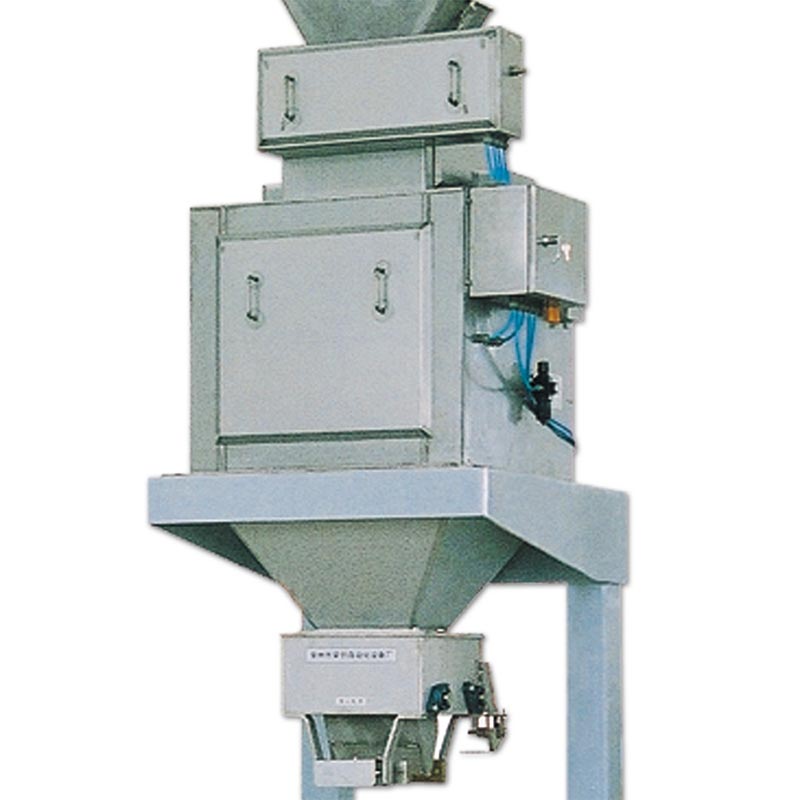
A quantitative packaging scale is a device integrating mechanical structure, automatic control, and weighing technology, mainly used to automatically and accurately package bulk materials (such as powders, granules, and lumps) into finished products of preset weight (such as 25kg/bag of fertilizer, 500g/box of snacks). Its core values are:
- Efficiency improvement: Replacing manual labor to complete the whole process of weighing-bagging-sealing, with a speed 3-5 times that of manual work;
- Precision guarantee: Real-time weight monitoring through sensors, with errors controllable within ±0.1% - ±0.5% (far lower than manual errors of more than ±2%);
- Cost reduction: Reducing labor input in the packaging link, while avoiding loss from over-packaging or compliance risks from under-packaging caused by weight errors;
- Standardization: Meeting the standardized production requirements of food, pharmaceutical and other industries, ensuring consistency of each batch of products.
For these reasons, quantitative packaging scales are widely used in food (flour, snacks, seasonings), chemical industry (fertilizers, plastic particles), medicine (traditional Chinese medicine granules, western medicine powders), building materials (cement, sand and gravel) and other fields, becoming an essential part of automated production lines.
II. Core Functions of Quantitative Packaging Scales: What Specific Problems Do They Solve?
The functions of quantitative packaging scales revolve around automated precision packaging, with the two most core points being:
1. Automatic quantitative adaptation: According to preset weight parameters (such as 10kg, 25kg, 500g), the equipment can automatically adjust the feeding amount without manual repeated weighing - for example, to switch packaging specifications, you only need to change a number in the control system, which can be completed in 1 minute;
2. Full-process automated packaging: From bagging to sealing in one go: the weighed materials automatically fall into the pre-clamped packaging bag, and then sealing (heat sealing/sewing/folding) is completed. The whole process requires no manual intervention, completely bid farewell to the traditional mode of one person holding the bag, one person pouring materials, one person sealing.
III. Structure of Quantitative Packaging Scales: Each Component Has a Key Role
To understand why quantitative packaging scales can be precise and efficient, we must first understand their composition logic - each component solves a specific problem:
- Storage bin: Stores bulk materials to be packaged, maintaining stable output of materials (avoiding chaotic packaging rhythm caused by uneven material supply);
- Feeding device: Responsible for delivering materials from the storage bin to the weighing hopper, usually adopting a combination of coarse feeding + fine feeding - coarse feeding for rapid feeding (saving time), fine feeding for slow replenishment (ensuring precision), perfectly balancing speed and accuracy;
- Weighing device: The core is the weight sensor, which can collect real-time weight data of materials in the weighing hopper, serving as the eyes of precision packaging;
- Bag clamping device: Automatically clamps empty packaging bags (such as woven bags, plastic bags) to ensure that materials can fall into the bag smoothly without leakage or spilling;
- Conveying device: Transports the packaging bags to the next process (such as sealing, palletizing), realizing assembly line operations of packaging-identification-storage;
- Control system: Equivalent to the brain of the equipment, responsible for setting parameters (target weight, feeding speed), monitoring operating status (fault alarm), recording data (output, qualified rate), and even connecting to the factory MES system to achieve intelligent management.
IV. How Does a Quantitative Packaging Scale Work? Understand the Whole Process in 5 Steps
The working principle of a quantitative packaging scale is actually very down-to-earth, which is a cycle of setting parameters → feeding and weighing → bag clamping and discharging → conveying cycle:
1. Initialization preparation: Before starting, the equipment first performs self-inspection (to ensure all components are normal), and the operator sets parameters such as target weight (e.g., 25kg) and feeding ratio (80% coarse feeding, 20% fine feeding) through the touch screen;
2. Feeding and weighing: The feeding device starts, and materials flow from the storage bin into the weighing hopper - the sensor transmits weight data to the control system in real time. When approaching the target weight, coarse feeding stops, and fine feeding continues replenishing;
3. Bag clamping and discharging: When the weight reaches the preset value, the bag clamping device automatically clamps the empty packaging bag, the discharge door of the weighing hopper opens, and the materials precisely fall into the bag;
4. Conveying and finishing: After discharging, the discharge door closes, the bag clamping device releases, and the conveyor belt sends the装好 packaging bag to the sealing machine or palletizer;
5. Cycle repeatedly: The equipment automatically returns to the feeding and weighing step to start the next round of packaging, with no manual operation required throughout the process.
V. Choosing the Right Quantitative Packaging Scale: 4 Key Factors to Consider
Choosing a quantitative packaging scale is not the more expensive the better, but to match your own production scenario, focusing on 4 points:
1. Material characteristics: Powder materials (such as flour, milk powder) are easy to generate dust, requiring a closed feeding system (to prevent material scattering); granular materials (such as plastic particles, rice) have good fluidity, and screw/belt feeding devices can be selected; viscous materials (such as molasses, coatings) are easy to stick to the wall, requiring a feeding hopper with anti-stick coating;
2. Packaging specifications: For small specifications of 1-5kg (such as snacks), choose a small quantitative packaging scale; for large specifications of 25-50kg (such as fertilizers), choose a large load model; at the same time, it should match the type of packaging bag (such as woven bags requiring sewing function, plastic bags requiring heat sealing function);
3. Precision requirements: The pharmaceutical and food industries have high precision requirements (such as error ±0.1%), requiring equipment with high-precision sensors (such as strain gauge, capacitive type); the chemical and building materials industries can have slightly wider errors (±0.5%), and conventional precision is sufficient;
4. Automation needs: If connecting to the production line, you can choose equipment with functions such as automatic inkjet coding, automatic labeling, and automatic folding to realize the whole-process automation of packaging-identification-storage.
VI. How to Maintain a Quantitative Packaging Scale? 3 Steps to Extend Its Service Life
The precision and service life of a quantitative packaging scale depend entirely on daily maintenance - doing the following 3 points well, the equipment can be used for 5-10 years:
1. Daily maintenance: Clean the equipment surface before starting each day (especially material residues in the weighing hopper and feeding port to avoid corroding the sensor); check if the sensor connection line is loose (to prevent inaccurate signals); check the air source pressure of the pneumatic bag clamping device (to ensure sufficient clamping force);
2. Regular maintenance: Calibrate the weighing precision with standard weights once a month (to avoid sensor drift); check if seals (such as the sealing ring of the discharge door) are aging every quarter (to prevent material leakage); lubricate moving parts (such as the bearings of the conveyor belt, the gears of the feeding device) every six months;
3. Long-term shutdown maintenance: If the equipment is not used for a long time, empty the materials in the storage bin and feeding device (to prevent); turn off the power and air source, and cover the equipment with a dust cover; power on and run for 10 minutes every month (to prevent parts from rusting).