Automatic Palletizer: An Efficiency Upgrade Tool For Modern Production Lines - A Comprehensive Analysis From Functions To Selection
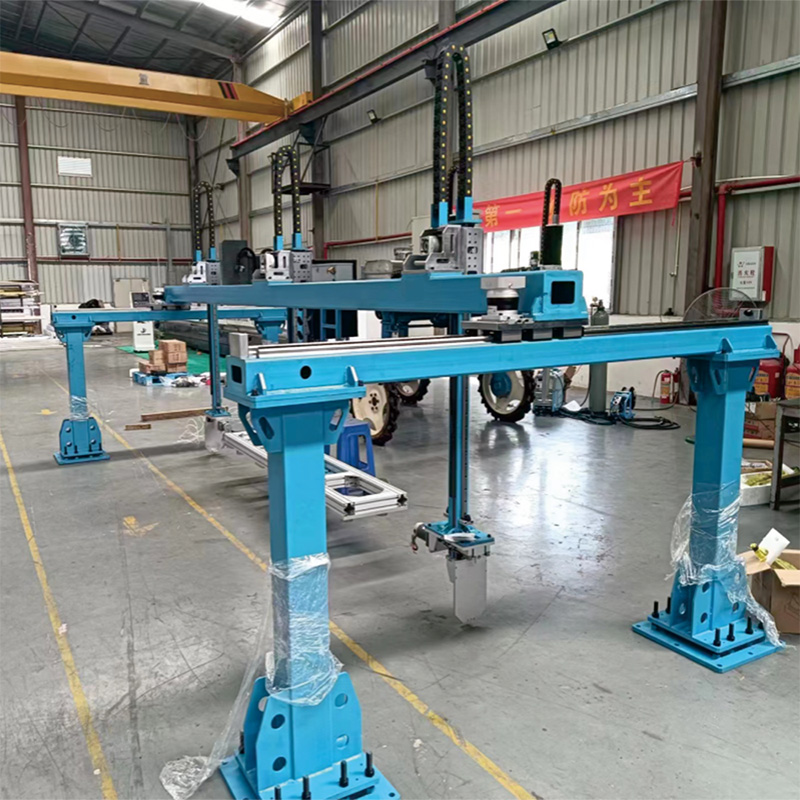
In traditional production lines, manual palletizing is the most easily overlooked yet cost-intensive: it not only requires a large amount of manual labor for repetitive handling and stacking but also often results in unstable pallets, or even cargo damage due to fatigue, and it is difficult to keep up with the high-speed rhythm of automated production lines. The emergence of automatic palletizers just solves this pain point - as one of the core equipment in automated production lines, it can automatically stack and pile products or goods onto pallets or other containers, replacing manual repetition with mechanical precision and becoming a key tool for various industries to improve efficiency.
I. What is an Automatic Palletizer?
An automatic palletizer is a device specially designed for automated production lines, with the core function of completing the entire grabbing-stacking-piling process of products without manual intervention. By integrating sensors, vision systems, and intelligent control systems, it transforms manual physical labor into standardized automated operations, ultimately achieving the three core values of improving production efficiency, reducing labor costs, and ensuring palletizing consistency.
II. Core Functions of Automatic Palletizers: Full Automation from Recognition to Control
The efficiency of automatic palletizers does not come from faster speed but from more precise process control. Its core functions can be broken down into four major links:
1. Automatic Recognition and Grabbing: Precisely capture the position, shape, and weight of products through sensors and vision systems, even for irregular or fragile products (such as bottled medicines, bagged chemical raw materials), avoiding grabbing errors;
2. Intelligent Palletizing Planning: According to preset programs (such as layered, staggered, rotating, etc.), stack products on pallets with optimal space utilization - for example, the food industry often uses staggered to enhance stability, and the logistics industry often uses layered to improve warehouse space utilization;
3. Automatic Stacking and Transfer: After completing the palletizing of a single pallet, the equipment can automatically transfer the entire pallet of goods to a designated location (such as the warehouse shelf area), supporting single-layer or multi-layer stacking without the need for manual forklift assistance;
4. Precise Process Control: Regulate the palletizing speed, position, and direction through the intelligent system to ensure that each step of the operation is seamlessly connected with the preceding production line (such as packaging machines, conveyors), avoiding waiting bottlenecks.
III. Industry Applications of Automatic Palletizers: Efficiency Solutions Covering Multiple Scenarios
The flexibility of automatic palletizers enables them to adapt to the special needs of different industries. The following are the most common application scenarios:
- Food and Beverage Industry: In the boxing of beverages and snacks,
automatic palletizers can stack entire boxes of products according to rules, avoiding unevenness or box during manual palletizing, while meeting the high hygiene requirements of the food industry;
- Chemical Industry: For barreled and bagged chemical raw materials (such as coatings, fertilizers), automatic palletizers can replace manual handling of heavy or corrosive goods, reducing safety risks and ensuring stacking stability;
- Pharmaceutical Industry: For boxed medicines and bottled reagents, the light grabbing and placing function of automatic palletizers can avoid damage to drug packaging and achieve zero pollution palletizing in accordance with GMP standards;
- Electronics Industry: In the palletizing of electronic components or complete machines, automatic palletizers can be precisely stacked according to anti-static requirements, avoiding electrostatic interference or component scattering during manual operation;
- Logistics Industry: In the cargo sorting of logistics centers, automatic palletizers can sort and stack express boxes of different specifications by volume, increasing warehouse space utilization by more than 30%.
IV. How to Choose the Right Automatic Palletizer? 5 Core Considerations
Choosing an automatic palletizer is not about choosing the most expensive one but choosing the one that best matches production needs. The following 5 points need to be focused on:
1. Production Scale and Output: Small-batch, multi-variety production (such as small-batch pharmaceutical reagents) is suitable for flexible programming equipment; large-scale continuous production (such as beverage production lines) requires high throughput palletizers to ensure consistency with the rhythm of the preceding production line;
2. Site Space and Layout: Measure the space size at the end of the production line (such as the width of the pallet conveying channel, ceiling height) to ensure that the equipment can be seamlessly integrated into the existing process, avoiding the embarrassment of equipment cannot be installed after arrival;
3. Cargo Specifications and Loading Capacity: Match the weight of the product (such as 50kg per box vs 25kg per bag) and size (such as 1m×1m pallet vs 0.8m×0.8m pallet) to ensure that the gripper load and pallet adaptability of the equipment meet the requirements;
4. Automation and Intelligence Requirements: If unmanned workshop is required, choose equipment that supports programmable control - by presetting palletizing rules, the equipment can automatically switch product specifications (such as switching from beverage boxes to snack boxes) without manual re;
5. Budget and Long-term Costs: Balance purchase cost and usage cost - low-priced equipment may have high later maintenance costs, while high-priced equipment may cause resource waste if the output is insufficient. It is recommended to calculate based on 3-year ROI (Return on Investment): if the labor cost saved within 3 years can cover the equipment price, it is worth investing.
V. Summary: Automatic Palletizers are a Balance between Efficiency and Flexibility
The value of automatic palletizers lies in their ability to transform repetitive physical labor into replicable automated capabilities - whether it is the high hygiene requirements of the food industry, the high safety requirements of the chemical industry, or the high space requirements of the logistics industry, they can meet the needs through customized processes.
For enterprises, the core logic of choosing an automatic palletizer is: replace human uncertainty with mechanical stability. There is no need to pursue the most advanced technology, just find the equipment that best matches your own production scenario, and you can achieve a qualitative improvement in production line efficiency.
This article covers the user's entire process from understanding to decision-making through the logic of pain point introduction - definition analysis - function breakdown - application scenarios - selection guide, and naturally incorporates core keywords such as automatic palletizer, production line efficiency, and automated equipment, which meets Google SEO requirements for content value and keyword relevance.